Safari in Rwanda: Where to See the Big Five?
Planning a trip to Rwanda and wondering where to see the Big 5 on a wildlife safari? Discover where to go as well as other safari options to see as many wild animals as possible.
Planning a trip to Rwanda and wondering where to see the Big 5 on a wildlife safari? Discover where to go as well as other safari options to see as many wild animals as possible during your journey. You'll find that Rwanda is a true paradise for animal lovers with diverse and varied experiences. The result? Moments full of emotion and encounters that will stay with you forever...
Akagera National Park: the one and only park where you can see the Big Five in Rwanda
A few words about the park's history...
Named after the Kagera River that runs along the border with Tanzania, the Akagera National Park is one of Rwanda's four national parks, alongside Volcanoes National Park, Nyungwe National Park, and Gishwati-Mukura National Park. Created in 1934 by the Belgian colonial administration, it is also one of Africa's oldest parks.
Composed of savannas, lakes, marshes, mountains, and forests, the park boasts a variety of ecosystems where countless wild animals live. It is the only place where you can see the Big Five on a safari in Rwanda. Although it is home today to all of Africa's major wildlife, the park has come a long way, as the region's biodiversity nearly disappeared a little over 20 years ago.
Indeed, the civil war, the Rwandan genocide, and poaching severely damaged the sanctuary in the 1990s. To escape persecution, thousands of refugees settled in the reserve, cutting down trees and occupying the land to establish their cattle herds. The result? While the park originally covered 2,700 km², it was reduced to 1,100 km² following the Tutsi genocide in 1994. Most wild animals either fled to Tanzania or were killed (through poisoning or poaching).
It took several years for the park to rise from the ashes. The first changes appeared in 2010 when management of the park was entrusted to the international NGO African Parks. Subsequently, many conservation operations were implemented:
An electric fence was built,
Rangers were trained,
Anti-poaching brigades were created,
A legal framework was established,
Wildlife reintroduction programs were launched (notably lions and black rhinoceros).
Thanks to all these measures, the animal population density increased and the park went from just under 5,000 animals in 2010 to over 13,000 in 2018. Today, Akagera National Park can be considered one of Africa's best safari destinations.
What animals can you see at Akagera National Park?
The Big Five
As we have just seen, Akagera National Park is home to the famous Big Five, namely:
The elephant,
The rhinoceros (black and white rhinoceros),
The buffalo,
The lion,
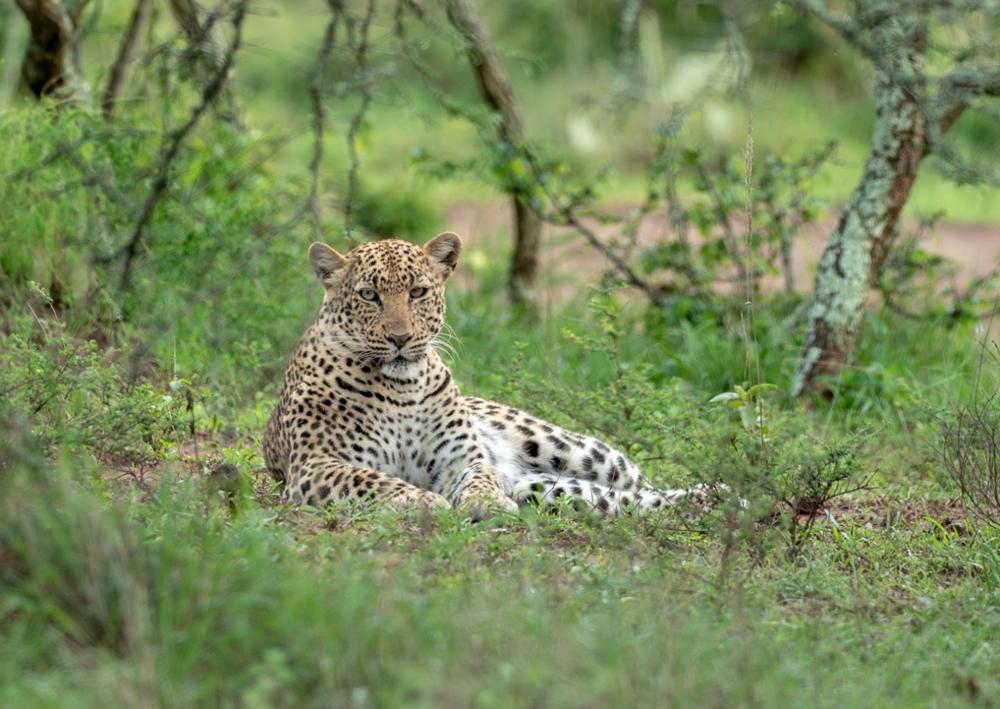
The leopard (the most difficult to observe).
Did you know?
The term "Big Five" was coined in the early 20th century by trophy hunters. Although it literally translates to "the five largest," the Big Five does not refer to the size of the animals, but rather to the fact that they are the most dangerous animals to hunt. Contrary to appearances, the buffalo is considered the most dangerous of the Big Five. It is also the only one not threatened with extinction.
Other animals
Besides the famous Big Five, Akagera National Park is home to numerous emblematic African animal species, among which we can cite:
The zebra,
The eland,
The roan antelope,
The crescent antelope,
The topi,
The impala,
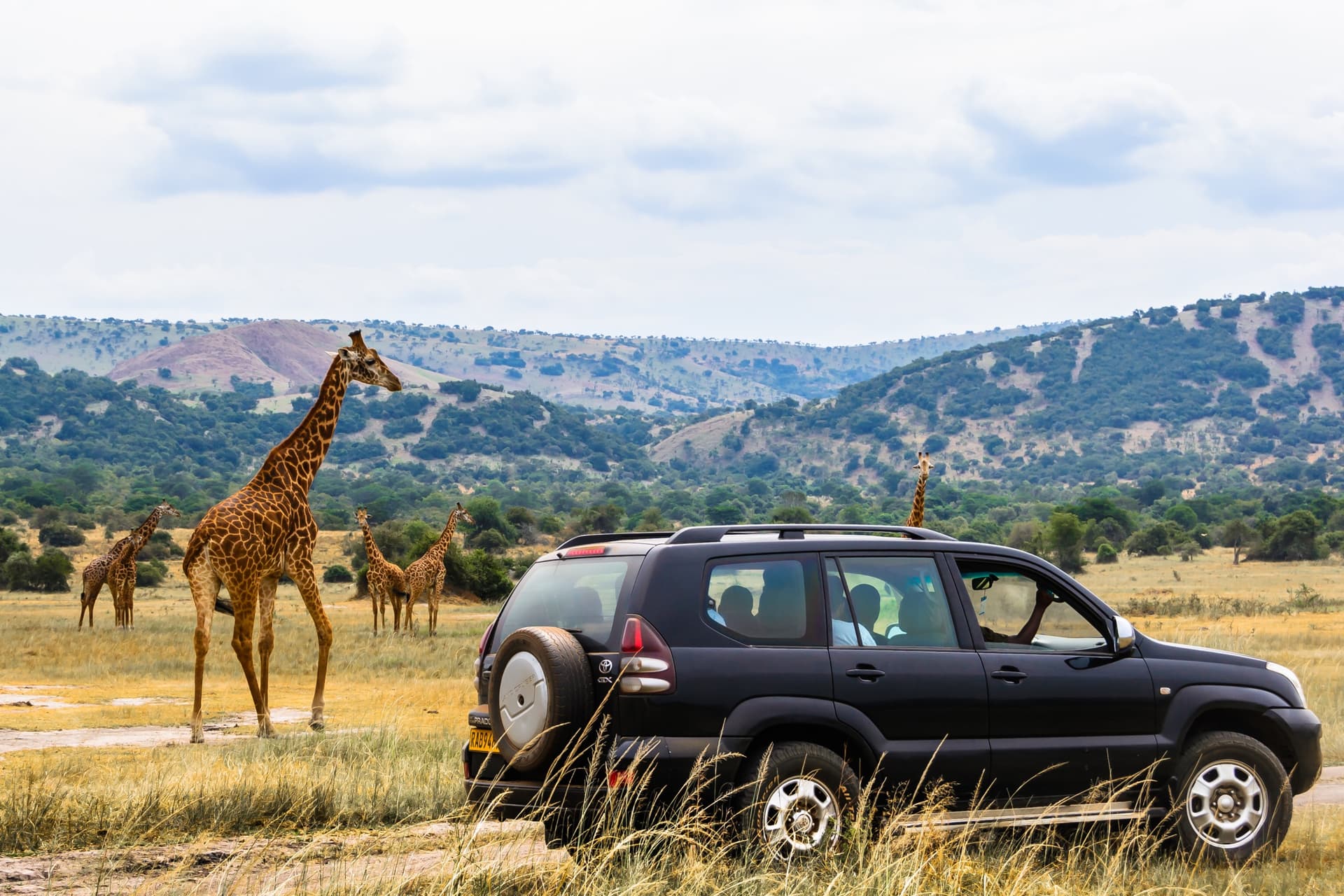
The giraffe,
The spotted hyena,
The warthog,
The black-backed jackal,
The blue monkey,
The vervet monkey,
The olive baboon
The hippopotamus,
The Nile crocodile...
Akagera National Park is also an excellent destination for birdwatching, with no fewer than 480 resident and migratory bird species, including:
The shoebill,
The crowned crane (Rwanda's national bird),
The hamerkop,
The three-banded plover,
The gonolek,
The crowned plover,
The African fish eagle…
Good to know:
Besides game drives (4x4 safari), Akagera National Park offers visitors other options:
Sunrise or sunset safaris: these are the best times of day to see animals;
Night safaris (night drives): this option increases your chances of seeing nocturnal animals and predators hunting;
Boat safaris: boat excursions on Lake Ihema allow you to see hippopotamuses, Nile crocodiles, and birdlife up close.
When should you do a safari at Akagera National Park?
Rwanda's climate is shaped by dry seasons and rainy seasons (monsoons) that succeed and alternate with each other:
December to February: the short dry season;
March to May: the long rainy season;
June to September: the long dry season;
October to November: the short rainy season.
The best times to safari in Akagera National Park in Rwanda correspond to the two dry seasons (December-February and June-September). Not only will you avoid the rain, but these are also the times of year when you have the best chance of observing the park's wildlife, as the grass is short and animals gather at water points, making them easier to spot. Note that the dry seasons are also the best periods for gorilla trekking.
Conversely, the rainy seasons are best for observing chimpanzees in Nyungwe National Park. These animals tend to hide deep in the forest during the rest of the year. The same applies to migratory bird watching, which is generally more abundant between October and November.
Note: Akagera National Park is open every day from 6:00 AM to 6:00 PM.
Where is Akagera National Park in Rwanda and how do you get there?
Wondering how to get to Akagera National Park? You'll be pleased to know that it's very easy to reach the park from Kigali since it's only a two-hour drive from Rwanda's capital. The park's location and its easy accessibility are major advantages compared to most parks and reserves in Africa, where access is often long and difficult.
To get to the park, you can rent your own vehicle (with or without a driver) or use a transfer service. Don't hesitate to contact us to help you organize your transportation and safari.
Where to stay on a safari at Akagera National Park?
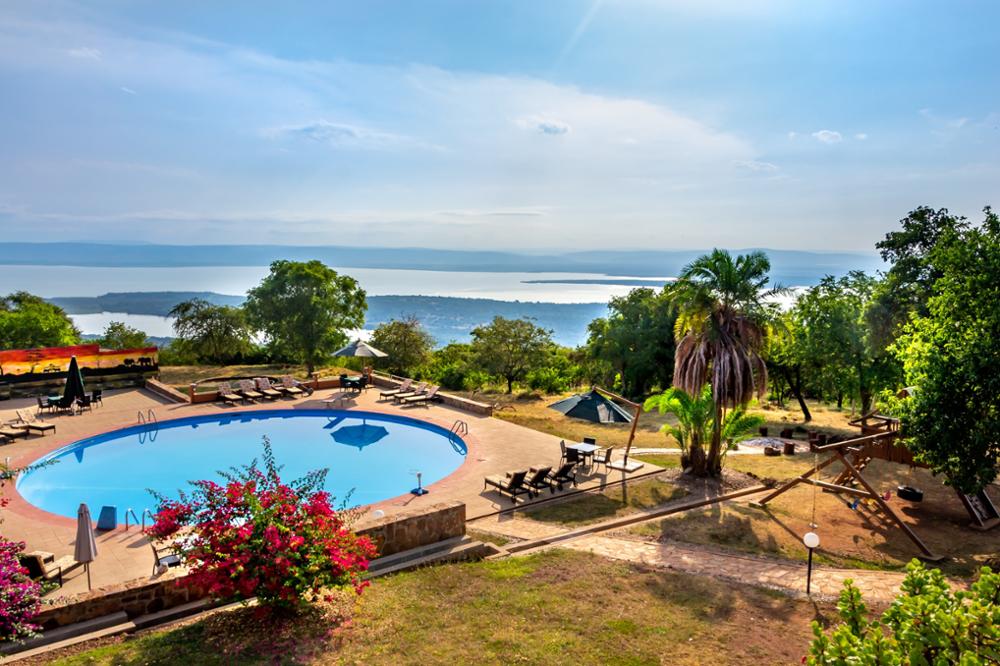
With the park's development and the growth of tourism, there are several accommodation options within the park, including luxurious and comfortable lodges, bush camps (with canvas tents) for an immersive nature experience, and 4 campsites for adventurers on a tight budget (from $25 per night per person). So there is something for everyone, all comfort levels, and all budgets.
How much does a safari at Akagera National Park cost?
Prices for a safari at Akagera National Park are:
$100 USD for adults per day;
$50 USD for children aged 6 to 12;
Free for ages 5 and under.
Prices are reduced depending on the length of your stay in the park. Thus, prices are $150 USD per adult and $75 USD for 6-12 year-olds for a 2-night stay, and $200 USD per adult and $100 USD per child for a 3-night stay in the park.
Additionally, extra fees apply depending on options and services:
Vehicle fees ($10 for vehicles registered in Rwanda);
Guide fees for self-drive safaris: $25 for a half-day, and $40 for a full day;
Excursion fees (boat, night drive...);
Accommodation fees, which vary depending on the option chosen.
Note that prices differ for residents and citizens of Rwanda as well as for African citizens.
Discover all the prices for safaris and excursions at Akagera National Park on the African Parks website.
Other types of wildlife safaris in Rwanda
While Akagera National Park is the one and only park in Rwanda where you can see the Big Five and the bulk of Africa's emblematic savanna animals, the country is home to other parks and reserves where you can observe animals on trekking. Here are the best examples:
Gorilla safari at Volcanoes National Park
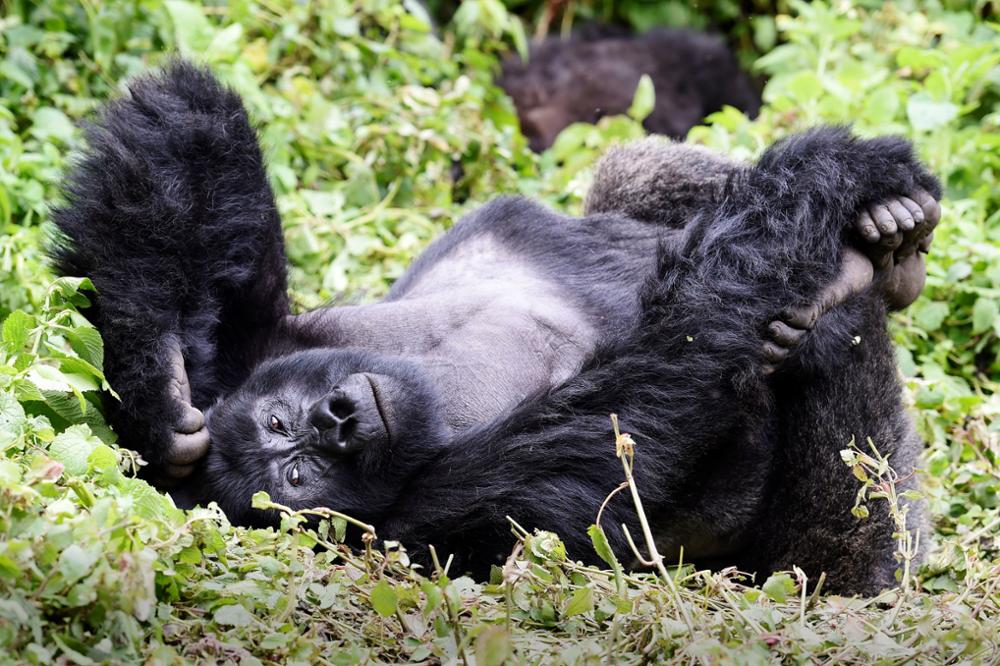
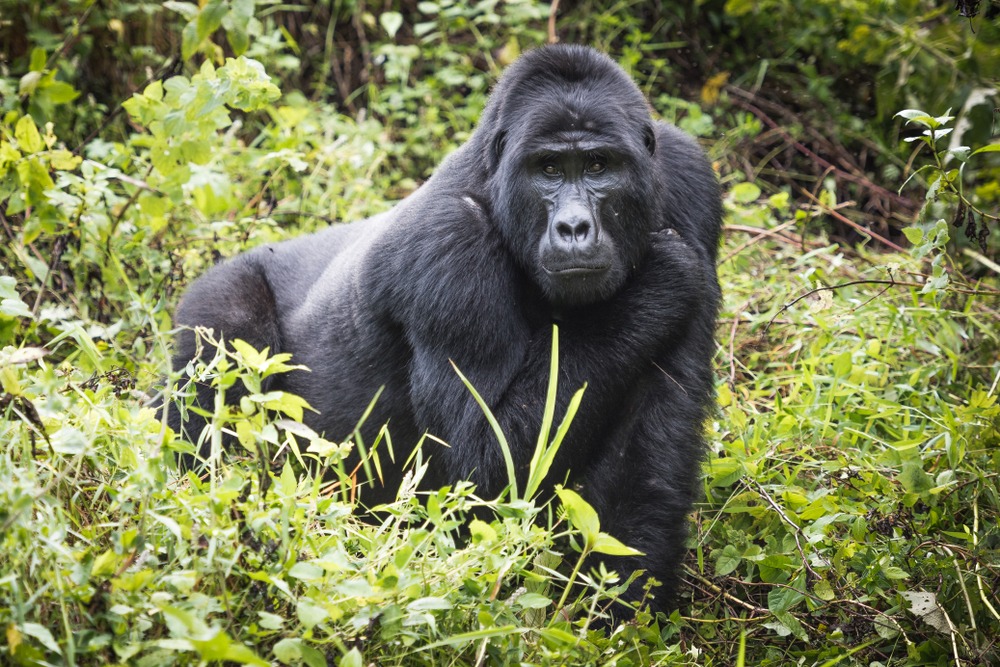
If there is one adventure to experience on a trip to Rwanda, it's an encounter with the last mountain gorillas. To do this, head to the Volcanoes National Park, located in northwestern Rwanda. It is one of the only places in the world (along with Uganda and the Democratic Republic of Congo) where you can still find these great primates, with whom we share 98.3% of our DNA.
The Volcanoes National Park is home to 10 gorilla groups habituated to humans, all dominated by the famous silverback gorilla. But to avoid harming their well-being and ensure their peace, many rules have been put in place to observe them.
First, each gorilla group can only be approached by one group of humans (composed of a maximum of 8 people) once per day, for 1 hour. In total, only 80 gorilla observation permits are issued each day in the park.
Second, the gorilla permit comes at a cost: budget $1,500 USD per person. A price that may seem exorbitant, but which, in addition to contributing to the conservation of the species, also supports local communities to reduce conflicts between humans and wildlife. And this strategy is paying off, as the number of gorillas continues to increase, when they were on the brink of extinction in the 1970s. In fact, it's the only great ape species in the world whose population is growing.
Besides gorilla trekking, the park also offers the opportunity to discover golden monkeys, hike to the former camp of the famous primatologist Dian Fossey, and make a pilgrimage to her grave. As a reminder, it was here that she spent nearly 20 years of her life studying gorillas before being tragically assassinated by a poacher in 1985.
Primate safari at Nyungwe National Park
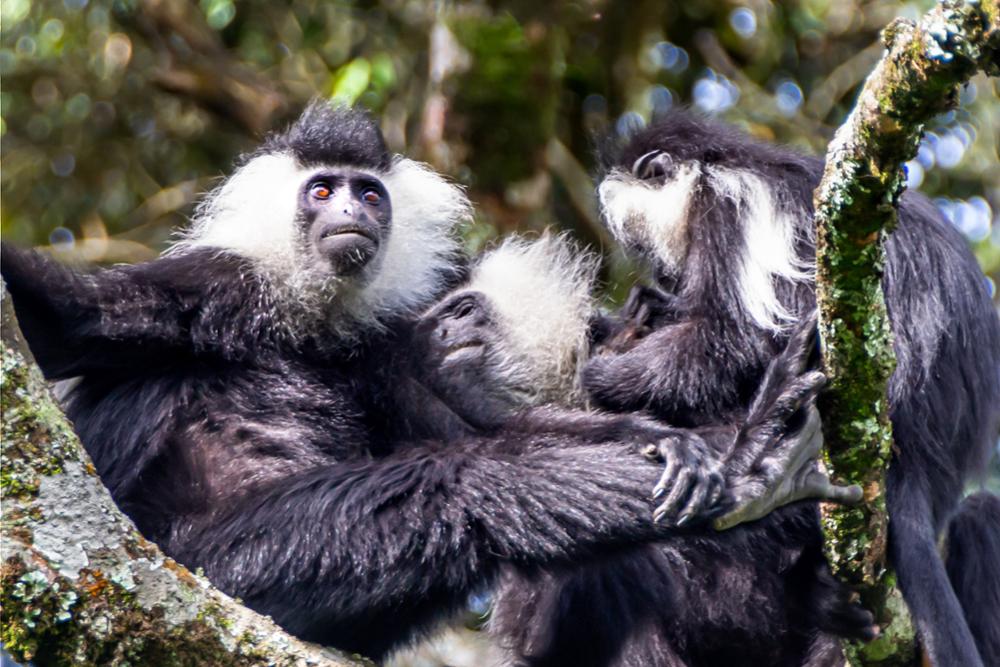
Head to southwestern Rwanda to discover one of Africa's most precious natural treasures: the Nyungwe National Park. Home to one of the continent's oldest montane tropical forests, the park is famous for its incredible biodiversity.
Considered the land of primates, it is home to 13 different species, including:
Chimpanzees,
Mona monkeys,
L'Hoest's monkeys,
Olive baboons,
Blue monkeys,
Grey-cheeked mangabeys,
Owl-faced guenons,
Golden monkeys,
Black and white colobus monkeys...
As you can see, it's the ideal place for a primate safari. The park is also a paradise for bird enthusiasts, with over 345 bird species recorded, and is home to more than 80 mammal species (warthogs, mongooses, African civets, leopards, side-striped jackals...).
To encounter all these animals, the only way is to organize a trek, which must be done with a guide.
Primate safari at Gishwati-Mukura National Park
Want more? There is another national park where you can encounter primates: Gishwati-Mukura National Park. It is the newest of the country's four national parks, as it was officially designated as a National Park in 2015.
Located in western Rwanda, just a few kilometers north of the Lake Kivu, this small park is home to two distinct forests: the large Gishwati and the small Mukura. These forests form the refuge for many primate species, such as chimpanzees, L'Hoest's monkeys, blue monkeys, vervet monkeys, baboons, black and white colobus monkeys, and golden monkeys. Birds are also well represented, with 232 species recorded on the territory.
Again, guided hikes offer travelers the opportunity to encounter these extraordinary animals...
As you can see, Rwanda's wildlife is so exceptional that it is one of the few countries in Africa where you can both do a wildlife safari in the savanna, see mountain gorillas and all sorts of primates in the forests. In short, this is THE African destination that will thrill all animal lovers.
Want to organize a safari in Rwanda, encounter mountain gorillas and do primate treks? Contact us right away to benefit from expert local advice. In the meantime, discover all our Rwanda travel itineraries as well as our article: 10 reasons to visit Rwanda on your next trip.
Frequently asked questions
Akagera National Park is the only place in Rwanda where it is possible to observe the complete Big Five: the elephant, the rhinoceros (black and white), the buffalo, the lion, and the leopard. This park, located in the east of the country, just 2 hours drive from Kigali, has been managed by the NGO African Parks since 2010.
Entrance to Akagera National Park costs $100 USD per adult per day, and $50 USD for children aged 6 to 12 (free for children under 5). Reduced rates apply for 2 or 3-night stays. Additional fees apply for vehicles, guides, and excursions (boat, night drive).
The permit to observe mountain gorillas at Volcanoes National Park costs $1,500 USD per person. This high fee contributes to species conservation and support for local communities. Each group is limited to a maximum of 8 people, for 1 hour of observation per day.
The best times for a safari in Rwanda are the two dry seasons: December to February and June to September. During these periods, vegetation is less dense and animals gather around water points, making them easier to observe. It is also the best season for gorilla trekking.
Yes, it is possible to observe chimpanzees in Rwanda, mainly in Nyungwe National Park, located in southwestern Rwanda. This park is home to 13 different primate species. The best time to see chimpanzees is during the rainy season (March-May and October-November), as they are more visible during this period.
Akagera National Park is located approximately 2 hours drive from Kigali, Rwanda's capital. It is one of Africa's most accessible parks. You can get there by renting a vehicle (with or without a driver) or by using a transfer service organized by your travel agency.