Traveling to Rwanda: Is It Dangerous? All Our Tips for Peaceful Travel
Rwanda promises intense emotions and exceptional landscapes: the Virunga volcanoes, highland lakes, encounters with mountain gorillas and chimpanzees, intimate safaris...
Rwanda promises intense emotions and exceptional landscapes: the Virunga volcanoes, highland lakes, encounters with mountain gorillas and chimpanzees, intimate safaris... But given current events, one question may be holding you back: is it really safe to travel to Rwanda today? Let's take stock of the situation (information current as of August 2025).
What is the current security situation in Rwanda?
Rwanda today is recognized as one of the most stable and safest countries in Africa. This observation may surprise those whose image of the country remains tied to the 1994 genocide. Yet, in the span of three decades, Rwanda has transformed into a model of resilience, governance, and security.
Strong political and institutional stability
Since the 2000s, Rwandan authorities have made internal security and national reconciliation absolute priorities. This has translated into:
a deterrent yet respectful police presence, notably in major cities;
Rigorous border and tourism access management: law enforcement actively ensure the safety of citizens and travelers alike;
a reinforced legal framework to prevent acts of violence and corruption;
modernization of infrastructure, promoting optimal control of movement;
a national reconciliation policy, which has fostered unity, social peace, and community dialogue.
The result? The crime rate is among the lowest on the continent, urban and rural violence is rare, and there is a strong civic culture. Indeed, Rwandans themselves actively participate in public order and security through local community initiatives. The Umuganda, a mandatory monthly day of community volunteering, is a telling example.
One of Africa's safest countries
This is not just our opinion, but that of the Global Peace Index (GPI). Indeed, the 2024 GPI ranked Rwanda among Africa's safest countries, ahead of South Africa, Kenya, Tanzania, and Uganda. The country even ranks in the top 10 safest countries on the continent!
Kigali, the capital, is regularly cited as one of the cleanest and safest cities on the continent. It is possible to walk around it with complete ease, day and night, which remains rare in other African capitals.
For information, the Global Peace Index, published by the Institute for Economics and Peace, evaluates the level of peace in 163 countries each year across 23 indicators grouped into three main categories: internal security (crime, political stability, relations with neighbors), internal and international conflicts, and level of militarization. |
What about the conflict with the Democratic Republic of the Congo?
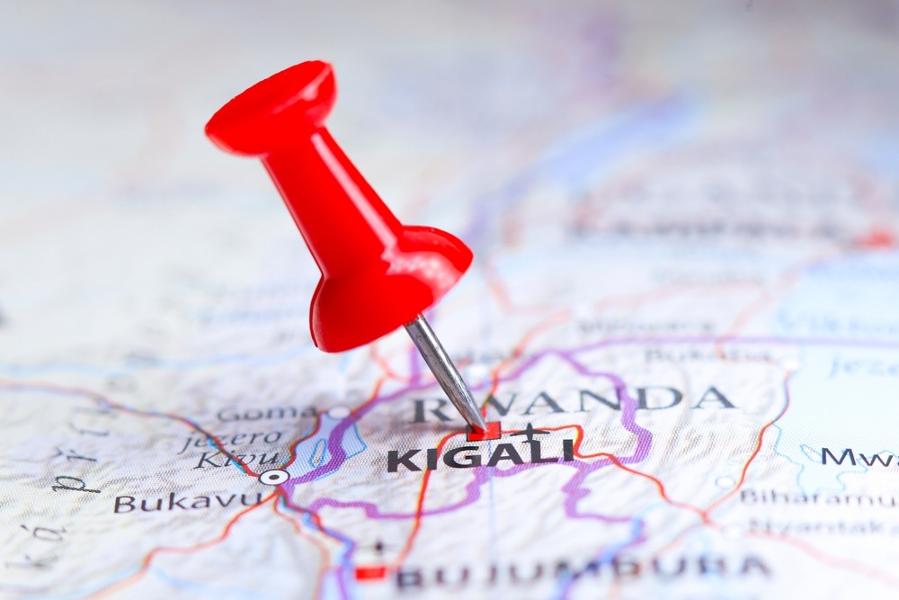
It is understandable that some travelers are concerned about the situation between Rwanda and the Democratic Republic of the Congo. The border region between eastern Congo (DRC) and northwestern Rwanda (notably the North Kivu region) has indeed experienced tensions for several years due to clashes between M23 rebels and Congolese forces.
However, it is important to note that these tensions, while real, do not take place on Rwandan territory, but on the Congolese side of the border. Border areas are heavily monitored and controlled by the military and national police. Furthermore, it should be remembered that Rwanda's tourist zones are located far from sensitive areas. Indeed, Rwanda's national parks (Volcanoes National Park, Akagera National Park, Nyungwe National Park), Lake Kivu, and Kigali are at a safe distance from at-risk borders.
Good to know: At Mapendano Voyages, we maintain constant contact with local authorities, embassies, guides, and our partners on the ground to adapt our itineraries if needed. Although current risks are minimal, we can adjust circuits in real time in case of developments, modify stages, or avoid an area if necessary. Your safety is our absolute priority. |
What do French and international authorities say?
At the time we publish this article (August 2025), no European authority advises against traveling to Rwanda. The French Ministry of Foreign Affairs website mentions no particular restrictions for Kigali, national parks, or major tourist regions.
Current recommendations are similar to those in effect for Tanzania or Kenya, and sometimes even less restrictive. Note that Belgian, Swiss, and Canadian authorities hold comparable positions.
The only recommendations concern, as is often the case, immediate border areas with the DRC, which are never part of standard tourist circuits. As France Diplomatie notes: "One should be particularly careful when traveling near the border with the DRC, given regular movements of rebel groups. Border posts at Gisenyi/Goma and Cyangugu/Bukavu are open only during the day and can be closed at any time and without notice."
What precautions should you take when traveling to Rwanda?
Even in a generally safe country like Rwanda, it is wise to follow a few common-sense precautions:
Before departure:
Consult the travel advice on the Ministry of Foreign Affairs website (France Diplomatie) for updated information;
Verify that your passport is valid for at least 6 months after your return from travel;
Take out travel insurance and verify it covers medical expenses, cancellations, and repatriation;
Register on Ariane if you are a French national: this allows you to be contacted and monitored in case of emergency.
On the ground:
Avoid traveling to sensitive border areas (notably the Virunga park on the DRC side) and stay within identified tourist zones;
Keep valuables in a safe place and do not carry large sums of money on you. Advice that applies anywhere in the world;
Follow the advice of your guide or driver and local residents;
Stay informed about local news by seeking advice from your accommodation or travel agency;
Respect photography rules: it is prohibited to photograph soldiers and military personnel or take pictures near security posts or official buildings. Also remember to ask locals' permission before photographing them;
Never ask anyone if they are Hutu or Tutsi: today, national unity comes first. Indeed, all citizens identify simply as Rwandan. Asking this question, even without bad intent, can be perceived as awkward, intrusive, and insensitive due to the painful and traumatic histories it may bring back.
The most important thing: trust your common sense and benevolent curiosity. Rwanda is a peaceful country and its inhabitants are renowned for being very warm and deeply respectful of visitors. The country has managed to recover from its painful history with dignity, and notions of peace, dialogue, and respect for one another are now at the heart of society.
Can you travel solo to Rwanda?
It is entirely possible to travel solo to Rwanda, especially if you are an experienced traveler. The country benefits from a well-maintained road network, clear signage, and a varied accommodation offer, ranging from small family guesthouses to luxury lodges. In Kigali, you will find numerous secure accommodations, welcoming restaurants, reliable taxis (by app or reservation), and a peaceful atmosphere that allows you to feel at ease quickly.
In major cities like Huye (Butare), Musanze, or Rubavu, it is also possible to get around by intercity buses or private taxi, for trips between parks or lakesides. Car rental is possible, though local driving habits may surprise if you are not used to driving in Africa.
In general, experienced independent travelers will have no trouble organizing themselves, especially if they take time to plan their itinerary in advance. In short, this English-speaking country offers a smooth and accessible experience for all those who wish to discover its treasures independently, provided they inform themselves well and take a few precautions.
What are the areas to prioritize and areas not recommended for tourists in Rwanda? Safe tourist areas:
Areas to avoid at present (late July 2025):
|
Why use a local agency for a Rwanda trip?
While it is possible to travel to Rwanda alone, some stages of the journey require more complex logistics or official authorizations, notably:
Trekking to see mountain gorillas or chimpanzees requires specific permits, to be booked well in advance;
Entry to national parks (Volcanoes, Nyungwe, Akagera) is subject to entrance fees, specific rules, and often obligatory accompaniment by an accredited guide;
In rural areas, language barriers (Kinyarwanda is dominant) and lack of cultural reference points can hinder travel ease.
Moreover, in case of changing conditions (rain, unforeseen events, social movements, or border incidents), being alone can make adjustments more difficult. This is why, even though autonomy is feasible, many travelers opt for partial or complete support, to travel freely and fully enjoy their stay.
This does not mean giving up your freedom, but rather offering yourself the opportunity to travel with peace of mind, without having to manage logistics, multiple reservations, or unexpected challenges.
The advantages of traveling to Rwanda with our Mapendano Voyages agency
Do you want a serene, authentic, and well-guided trip? Here is what we guarantee you at Mapendano Voyages, our local English-speaking agency based in Kigali:
Local expertise: our guides, drivers, and advisors live in Rwanda, speak the language, know each region, and follow the situation in real time. They can teach you everything you need to know about local customs and help you understand Rwandan culture;
Logistics and assistance: you can benefit from complete logistical support (reservations, transportation, trek permits, etc.) and assistance throughout your trip;
Safety & responsiveness: we adapt each itinerary based on current events, with personalized support and ongoing monitoring on the ground;
Responsible human exchanges: we promote encounters with local communities and support sustainable and fair tourism;
100% tailor-made travel: whether traveling solo, as a couple, with family, or with friends, we design your trip according to your wishes, pace, and budget;
English-speaking support from A to Z: before, during, and after your trip, you have a dedicated English-speaking contact, reachable at any time.
Note: Our Mapendano Voyages agency is a member of the Nomadays travel collective, which guarantees a booking managed by a French agency: protected payment, English-speaking support, and Atout France guarantees. |
What our travelers say
Here are some recent testimonials from travelers who went with Mapendano Voyages, to help you envision your journey:
"My first trip to Rwanda, my very first to Africa! I had some apprehensions before leaving because of information about the region, but on the ground, I was amazed. We experienced one surprise after another during 12 days across this magnificent country. Rwandans are warm and of a rare kindness. The country is incredibly clean and we never felt insecure! Everything was perfect! Mapendano and our guide organized this unforgettable trip beautifully for us! You can travel to Rwanda with your eyes closed with the Nomadays collective! We can't wait to return!"
Simon V. - June 2025
"A wonderful trip to Rwanda where tranquility and admirable sweetness of life reign. Without a doubt, a country where we had fantastic moments with family... An impeccable organization from Mapendano who listened to our wishes... Certainly something to do again without hesitation..."
Nathalie D. - June 2025
"Rwanda is a beautiful and welcoming country! With its hills, verdant volcanoes, and magnificent lakes, it's an ideal place for nature and animal lovers, for adventurers and the curious. Rwanda is a safe and stable country where we felt completely secure. Rwandans are very welcoming and smiling, always ready to help! I have traveled in other African countries and elsewhere around the world, and I assure you this trip was the trip of my lifetime. Thank you Mapendano and Nomadays for the exceptional organization!"
Django D. - June 2025
In conclusion: is Rwanda a safe country for travelers?
Rwanda is a welcoming, peaceful, and very well-organized country for tourists. You will feel safe in the cities as well as in the natural parks, from your arrival at Kigali airport. Despite concerns related to regional geopolitics, Rwanda remains one of the most fascinating and accessible nations on the African continent. The country is even an excellent choice for a first trip to Africa!
So, ready to discover the wonders of the land of a thousand hills?
Discover all our Rwanda travel circuits for inspiration.
To learn more, also discover:
Frequently asked questions
Yes, Rwanda is considered one of Africa's safest countries. Ranked in the top 10 of the 2024 Global Peace Index for the continent, it has one of the lowest crime rates in Africa. Kigali is renowned as one of Africa's safest and cleanest capitals. Tourist areas (national parks, Lake Kivu, Kigali) are far from sensitive borders and under tight surveillance.
French, Belgian, Swiss, and Canadian nationals can obtain a visa on arrival or via the Rwanda e-Visa online (irembo.gov.rw). The tourist visa is generally valid for 30 days. It is recommended to complete the process before departure to avoid any delays at Kigali airport.
The tensions between Rwanda and the DRC (related to M23 rebels) take place on the Congolese side of the border, not on Rwandan territory. Rwandan tourist areas (Volcanoes, Akagera, Nyungwe national parks, Lake Kivu in Kibuye) are located at a safe distance from sensitive border areas. Only the immediate border surroundings with the DRC (notably around Gisenyi/Goma) are not recommended — and they never form part of standard tourist circuits.
Yellow fever vaccination is mandatory if arriving from certain at-risk countries and strongly recommended in all cases. It is also advisable to update vaccinations for diphtheria-tetanus-poliomyelitis, hepatitis A and B, typhoid, and meningitis. Antimalarial treatment is recommended for the entire duration of stay. Consult your doctor or an international vaccination center at least 4 to 6 weeks before departure.
Yes, Rwanda is considered an accessible destination for women traveling solo. The country benefits from a calm atmosphere, reliable infrastructure, and residents renowned for their respect and kindness toward visitors. In Kigali, traveling in the evening is generally safe. In rural areas or parks, it is still recommended to be accompanied by an accredited guide, both for safety and for the richness of the experience.
Permits for gorilla trekking in Volcanoes National Park are issued by the Rwanda Development Board (RDB). They are limited in number (approximately 96 per day) and highly sought after: it is essential to book them several months in advance, ideally 6 to 12 months before departure for high season periods (June-September). The official rate is USD 1,500 per person. Working through a local agency greatly facilitates this process.