Why Visit Rwanda: Our 10 Reasons
Despite a heavy and consequential past, Rwanda has unexpectedly found its place among Africa's safest countries.
Despite a heavy and consequential past, Rwanda has unexpectedly found its place among Africa's safest countries. With its natural treasures and resilient, welcoming people, the "Land of a Thousand Hills" stands as a premier destination for adventure and nature enthusiasts. Discover why visiting Rwanda is an absolute must on your next getaway!
1. To discover unique and pristine landscapes

Nicknamed the "land of a thousand hills," Rwanda is dominated by mountains in the west and savannas in the southeast. Renowned for its incredible diversity of landscapes, you'll find volcanoes, one of Africa's oldest tropical rainforests, and numerous lakes.
Visiting Rwanda thus promises total escape, with wonder waiting at every corner of the country. It's also an opportunity to discover a destination still spared from mass tourism and venture off the beaten path.
An easily accessible destination...
Rwanda is easy to reach: there are direct flights connecting Paris to Kigali for a journey of approximately 8 hours. Once there, getting around is straightforward. The road network is well-developed, and you'll have no trouble reaching all major sites by car.
2. To discover Africa's cleanest country

Rwanda is considered Africa's cleanest country. Through numerous measures, the nation has successfully established genuine national ecological consciousness. Notably, it was the first African country to ban plastic bags on its territory in 2008.
Rwanda also has a national cleaning day called "Umuganda," which means "to gather for a common purpose" in Kinyarwanda. Umuganda takes place on the last Saturday of each month. From 8am to 11am, Rwandans are invited to carry out community service missions (collecting street litter, assisting the elderly, building public infrastructure, etc.). Enshrined in the Constitution, this day is mandatory. Fines are issued for non-participation.
3. To encounter the mountain gorillas
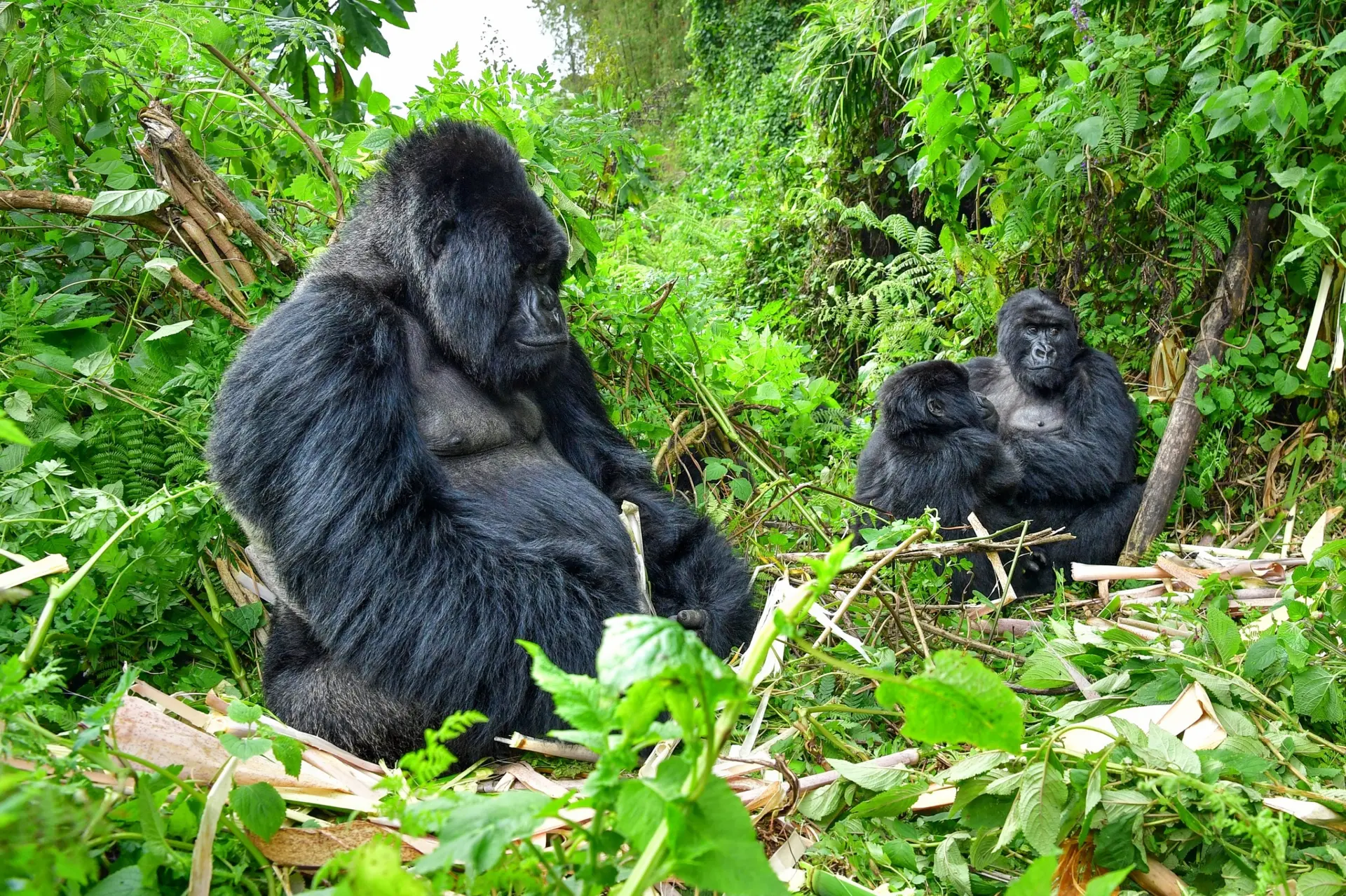
If there's one adventure to experience on a Rwanda trip, it's an encounter with the last mountain gorillas. Endangered, they are found only in the Great Lakes region of Africa. In Rwanda, the largest primates on earth have made their home in Volcanoes National Park.
Living in groups of 5 to 50 individuals led by the dominant male, the renowned "silverback," gorillas are social beings. Contrary to their reputation, they are shy and peaceful animals. One thing is certain: meeting mountain gorillas promises an emotionally rich experience.
Gorilla observation treks are subject to rules to protect the species and ensure their survival. Only 80 permits are issued daily to tourists, who are allowed to spend one hour (not a minute more) in their company.
Following in Dian Fossey's footsteps...
The preservation of mountain gorillas owes much to renowned American primatologist Dian Fossey, who fought tirelessly for their survival. Murdered in her research center cabin, Karisoke, by poachers in 1985, her body now rests in the gorilla cemetery, alongside one of her favorite gorillas (Digit). To honor her memory, you can visit Dian Fossey's tomb and her institute.
4. To trek to the chimpanzees

After the mountain gorillas comes the chance to encounter chimpanzees! A land of primates, Rwanda is the ideal destination to see chimpanzees in their natural habitat. There are three main zones where you can trek to chimpanzees in Rwanda: Nyungwe National Park, Gishwati-Mukura National Park, and Cyamudongo Forest.
It's notably in Nyungwe Forest that the highest number of chimpanzees live, with approximately 500 individuals, including two groups habituated to humans.
As with gorillas, chimpanzee observation is subject to restrictions: visitors can spend only one hour in their company once contact is established.
Other primate species to discover in Rwanda:
Considered the kingdom of primates, Rwanda offers the chance to see several monkey species. For instance, Nyungwe Forest is estimated to contain 25% of all living primate populations in Africa. Among other monkey species to discover, you'll find:
Baboons,
Black-and-white colobus monkeys,
Golden monkeys,
Vervet monkeys,
L'Hoest's monkeys,
Grey-cheeked mangabeys...
5. To enjoy an intimate safari experience

Have you always dreamed of a safari? Rwanda has a savanna park where you can see all of Africa's iconic wildlife, including the famous Big Five. This is Akagera National Park.
Located in the east of the country, on the Tanzanian border, the park is far less known than those in neighboring countries. Yet it offers a condensed version of all the beauty of a wildlife safari. All in an ultra-intimate atmosphere, far from over-crowded tourist parks and at relatively affordable prices...
Among the animals you might see on a safari at Akagera National Park:
Big Five animals: elephant, rhinoceros (black and white), buffalo, lion, and leopard,
Zebra,
Impala,
Antelope,
Topi,
Eland,
Giraffe,
Hippopotamus (Lake Ihema),
Crocodile (Lake Ihema),
Over 500 bird species...
To encounter them, you can arrange a game drive safari (4x4 safari with a private driver), self-drive safari (renting a vehicle on your own), boat safari on Lake Ihema, or night safari to observe predators in action.
Good to know:
Beyond being uncrowded and offering safaris at accessible prices, Akagera National Park is very easy to access. Unlike most parks and reserves in Africa, you don't need to fly to get there. It's just a 3-hour drive from Kigali.
6. To hike in Volcanoes National Park

Attention trekking and hiking enthusiasts: Rwanda is ideal terrain for outdoor adventures. Volcanoes National Park is undoubtedly the most popular among them.
The park is home to 5 of the 8 volcanoes that form the Virunga Mountains volcanic chain (Karisimbi, Bisoke, Muhavura, Gahinga, and Sabyinyo). While known for mountain gorillas, the park is also a haven for trekking enthusiasts. Numerous hiking trails invite adventurers to explore the park, with some allowing you to climb one of the volcanoes, such as the trail leading to the crater of Bisoke Volcano.
7. To explore one of Africa's oldest tropical rainforests

Among Rwanda's natural treasures is one of Africa's oldest tropical rainforests: Nyungwe Forest. Located within Nyungwe Forest National Park, this high-altitude primary forest harbors unique biodiversity.
It contains Africa's highest density of primates (13 primate species, including chimpanzees). Birdwatchers will be delighted to find over 300 bird species. Regarding flora, the forest contains over 240 tree species and more than 100 orchid species.
Another highlight of the park is the Canopy Walkway. This is a 200-meter-long metal bridge suspended over 70 meters above the ground. The walkway allows you to admire the canopy while enjoying an unobstructed view of the tree tops while observing monkeys and birds.
8. To relax on the shores of Lake Kivu

Located in the Albertine Rift Valley, Lake Kivu forms the natural border between Rwanda and the Democratic Republic of Congo. With an area of nearly 2,700 km², it's the country's largest lake. Offering majestic scenery—sandy beaches, emerald-green water, hillsides covered with tea plantations, and volcanoes in the background—Lake Kivu is among Rwanda's must-sees.
Among things to do and see at Lake Kivu:
Hiking along the lake shores and surrounding trails;
Boat rides on Lake Kivu;
Discovery of the islands dotting the lake (Île Napoléon, Île Amahoro): reach them on a boat ride or by kayak;
Wildlife observation: notably birds, with approximately 200 different species;
Lake exploration by kayak;
Swimming in Lake Kivu: the absence of dangerous animals ensures safe swimming;
Relaxing on the lake's beaches;
Meeting locals: you can observe the coming and going of fishing boats loaded with sardines or tilapia...
As you can see, a Lake Kivu stay is the perfect opportunity for a peaceful break and to pause time. To stay at Lake Kivu, we recommend lodging in Gisenyi or Kibuye.
9. To discover the UN's best African capital

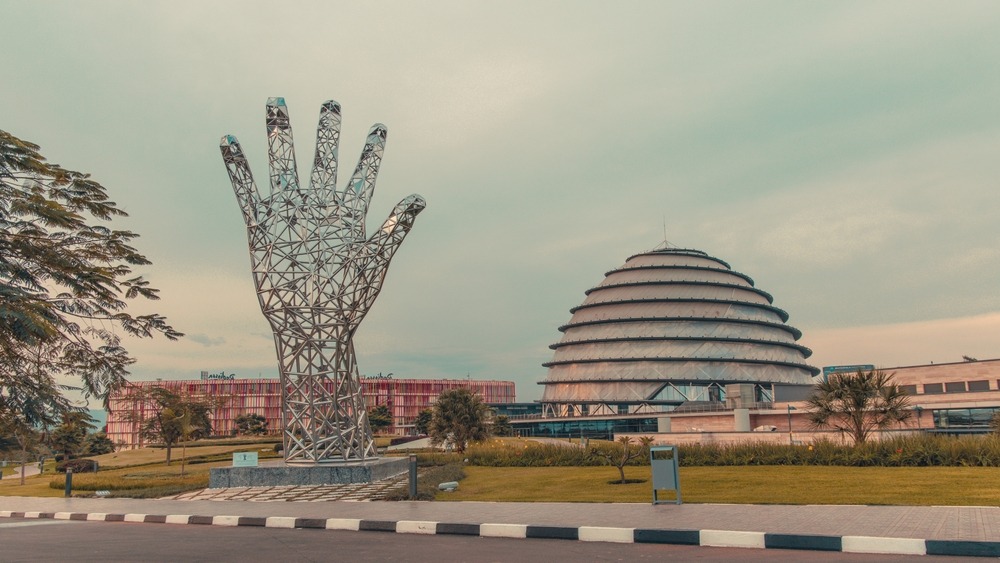
Despite its past, Rwanda has executed a 180-degree turn, becoming one of Africa's safest destinations. Its capital, Kigali, was even named "best African capital" by the UN. Beyond being green and clean, Kigali serves as a model for urban development.
Authorities make it a priority to ensure the city is pleasant to live in, and residents are fully invested in achieving this (Umuganda plays a big role). The result? The city is nearly free of litter, its roads are impeccably maintained, green spaces are abundant... In short, Kigali is a delightful place to live, far removed from the hustle and bustle of major African cities!
10. To understand the tragic history of the Rwandan genocide

It's impossible to visit Rwanda without engaging with its tragic past. Several sites help visitors understand the history and remember the horror of the 1994 Rwandan genocide, which claimed over one million lives. Overall, there are memorials in each of Rwanda's 30 districts, with the main ones being:
Kigali Genocide Memorial,
Gisenyi Commemorative Site,
Murambi Genocide Commemorative Site,
Gisozi Commemorative Site,
Nyamata Commemorative Site,
Bisesero Commemorative Site,
Nyanza Commemorative Site,
Ntarama Commemorative Site.
Though these emotionally charged places are difficult, they are essential visits to confront the horror that devastated the country. As François Janne d'Othée, journalist behind Petit Futé Rwanda, explains in an interview for 20minutes : "It's not morbid tourism; it allows understanding what this country experienced in 1994. You need to have a strong spirit and heart, but it's part of Rwanda."
Practical information:
Country Profile:
Location: Situated in the heart of the Great Lakes region, Rwanda borders Burundi, Uganda, the Democratic Republic of Congo (DRC), and Tanzania.
Language: Kinyarwanda is Rwanda's official language. English, French, and Swahili are also spoken throughout the country.
Currency: Rwanda's currency is the Rwandan Franc (RWF).
Time difference: There is no time difference with France in summer, but a 1-hour difference in winter when clocks change.
What are the entry requirements for Rwanda?
Since March 8, 2020, a free 30-day visa is issued upon arrival for French nationals. In other words, no visa is required. However, travelers must present a passport valid for at least 6 months after the return date and a return flight ticket.
Health-wise, no vaccine is mandatory to enter Rwanda, except yellow fever vaccination, which is mandatory for those coming from countries where it is endemic. However, vaccinations against typhoid, viral hepatitis A and B, diphtheria, rabies, tetanus, poliomyelitis, and pertussis are strongly recommended. Antimalarial medication may also be advised.
What is the best time to visit Rwanda?
Rwanda's climate features two seasons:
Dry season: a main dry season from June to August and a short dry season in January.
Rainy season: a first season from February to May and a second wet season from September to December.
Throughout the year, temperature generally ranges from 16°C to 28°C. It rarely exceeds 30°C and almost never drops below 14°C (except in mountainous areas where nights can be cold).
Generally, the best time to visit Rwanda—whether for gorilla and chimpanzee trekking or safari—is during the dry seasons: in January or between June and August.
How long should you plan for a Rwanda visit?
We recommend planning at least one week on the ground. It's the minimum to discover Rwanda's highlights without rushing (remember, getting around Rwanda is very easy). Of course, if you want to take your time and venture off the beaten path, a 2-week or longer stay is ideal!
Frequently asked questions
A mountain gorilla observation permit in Rwanda costs approximately USD 1,500 per person for one hour with the gorillas. This price is set by the Rwanda Development Board and directly supports species conservation. It's highly recommended to book your permit several months in advance, as only 80 permits are issued daily.
Yes, Rwanda is considered one of Africa's safest countries. Crime rates are low, infrastructure is well-developed, and the capital Kigali has been praised for its orderliness and cleanliness. As with any trip, it's advisable to remain vigilant, follow local guidelines, and purchase comprehensive travel insurance.
Since March 8, 2020, French nationals enjoy a free 30-day visa issued upon arrival in Rwanda. Simply present a passport valid for at least 6 months after your return date and a return flight ticket. No advance embassy procedures are necessary.
Yes, swimming is possible in Lake Kivu. Unlike many African lakes, Lake Kivu is free of crocodiles and schistosomiasis in areas accessible to tourists, particularly near Gisenyi and Kibuye. It's one of Central Africa's rare lakes where you can swim safely. It's advisable to check locally for recommended swimming areas.