The Ellen DeGeneres Campus of the Dian Fossey Gorilla Fund
The Ellen DeGeneres Campus of the Dian Fossey Gorilla Fund
Inaugurated in 2022 in Kinigi, the Dian Fossey Gorilla Fund campus extends the primatologist's work just a stone's throw from Volcanoes National Park.
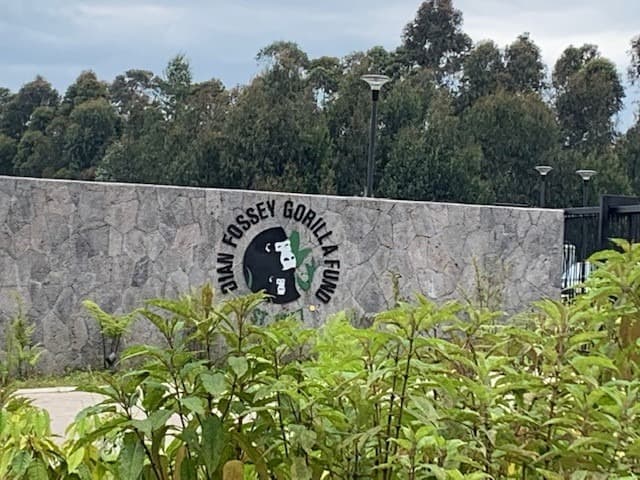
The Ellen DeGeneres Campus of the Dian Fossey Gorilla Fund is a conservation, research, and education center dedicated to protecting mountain gorillas. Inaugurated in February 2022 in Kinigi, in Musanze district, it carries forward Dian Fossey's scientific legacy in immediate proximity to Volcanoes National Park. The project came to life through the philanthropic support of Ellen DeGeneres and Portia de Rossi, who announced its creation in 2018 for the broadcaster's 60th birthday.
Why visit the campus
The site combines three functions rarely found in one place: an operational research hub, an educational program for Rwandan communities, and a public visitor trail. For a traveler interested in great ape conservation, it is one of the rare locations where you can understand concretely how mountain gorilla protection unfolds day to day—a species with a global population estimated at just over 1,000 individuals.
The campus logically complements gorilla trekking in Volcanoes National Park by placing the experience within its scientific and historical context, from Dian Fossey's first observations at Karisoke to current programs in genetics and health surveillance.
History and origins
The idea for the campus emerged from a visit by Ellen DeGeneres and Portia de Rossi to Rwanda. In 2018, for Ellen's 60th birthday, Portia de Rossi publicly announced the creation of a permanent center dedicated to the Dian Fossey Gorilla Fund, which until then had operated from temporary quarters in Musanze. The fundraising effort drew private donors from around the world.
The campus was inaugurated in February 2022. It provided the Fossey Fund, for the first time, with dedicated infrastructure to conduct its field missions and training programs, more than forty years after Dian Fossey's assassination in 1985 in the Virunga volcanoes.
What to see on site
The campus spans 12 hectares and is organized around three main buildings:
- Sandy and Harold Price Research Center: laboratories for physiology, genetics, and paleontology dedicated to mountain gorillas and their environment.
- Rob and Melani Walton Education Center: classrooms, library, and computer lab for Rwandan students and researchers in training.
- Cindy Broder Conservation Gallery: exhibition space open to the public, which traces the history of gorilla conservation and features a replica of Dian Fossey's forest cabin as well as original objects that belonged to the primatologist.
The architecture merits attention. The buildings incorporate green roofs, a rainwater harvesting system, and a wetland that treats wastewater through vegetative filtration. Porches and paving are cut from local volcanic stone, directly connecting to the Virunga landscape. The design prioritizes natural ventilation and lighting to reduce energy consumption.
The Virunga Overlook Lounge, a reception area oriented toward the volcanic range, offers sweeping views of the volcanoes that are home to the gorillas studied by Fossey Fund teams.
Practical information
The campus is open to the public year-round during daytime hours. Three visit options are available:
- Self-guided visit: tour of the Conservation Gallery, with access to a replica of Dian Fossey's cabin and exhibitions on conservation history.
- VIP "Behind the Scenes" visit: private guided tour led by a member of the Fossey Fund leadership team, with access to laboratories and presentations of ongoing research.
- Silverback Sundowner: gallery visit followed by an aperitif at the Virunga Overlook Lounge, in the company of gorilla specialists.
Rates vary depending on your chosen option; allow half a day for the self-guided visit, more for VIP and Sundowner options. A gift shop and the Gorilla Café provide additional services on site. Revenues generated contribute directly to conservation programs.
When to go
The campus is open to visitors year-round. The most comfortable period in Rwanda corresponds to the two dry seasons: mid-December to mid-February and June to mid-September. These windows are also most favorable for gorilla trekking in Volcanoes National Park, making it easy to combine both experiences. The rainy seasons (March-May and October-November) remain accessible, with fewer crowds.
How to get there
The campus is located in Kinigi, near the headquarters of Volcanoes National Park. From Kigali, allow 2 to 3 hours of driving depending on traffic. Standard options include car rental with or without a driver, and transfers organized by a tour operator. By public transport, buses run daily from Kigali to Musanze; the final leg from Musanze to Kinigi is covered by private taxi or motorcycle taxi.
Nearby attractions
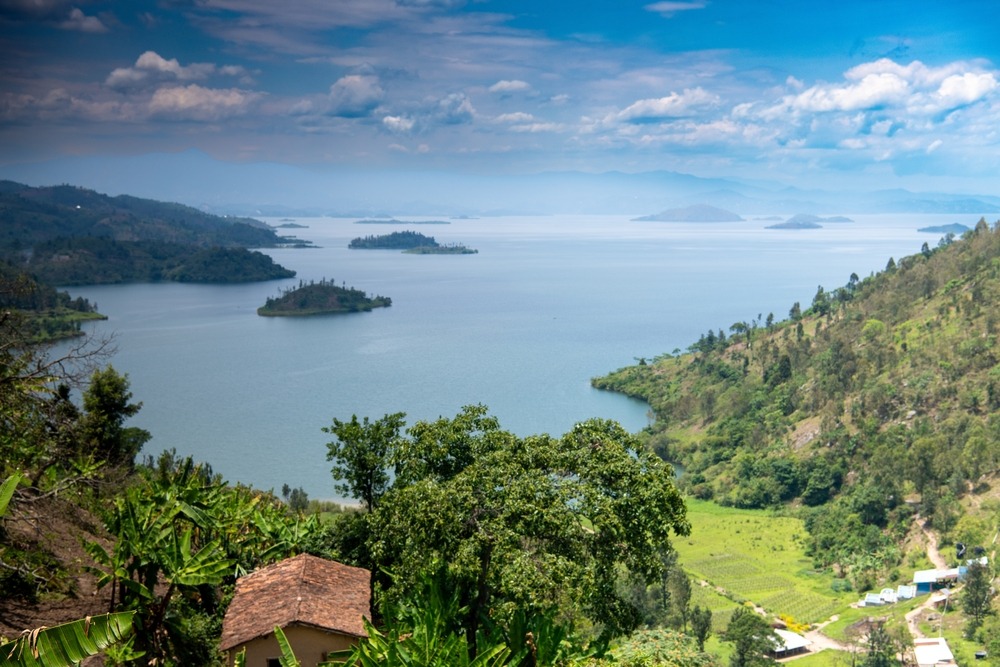
The campus fits into a natural circuit around northern Rwanda. Volcanoes National Park, an immediate neighbor, is the historic site for gorilla trekking and hiking Mount Bisoke. Musanze, about twenty minutes away, provides access to volcanic caves and Lakes Burera and Ruhondo. Further west, Lake Kivu offers a relaxation stop after the volcanoes.
To extend your discovery of the country, you can include the Kigali Genocide Memorial on your return to the capital, visit the Ethnographic Museum in Huye, or continue east with Lake Ihema in Akagera park. The reconciliation village of Mbyo completes a more human-centered approach to contemporary Rwanda.
Frequently asked questions
Frequently asked questions
Plan your trip
The Ellen DeGeneres Campus fits naturally into an itinerary combining gorillas, lakes, and contemporary Rwanda's memory. To build a customized trip, explore our Rwanda travel ideas.
Interested in this visit?
We can include it in your personalised itinerary.