Ethnographic Museum
Ethnographic Museum
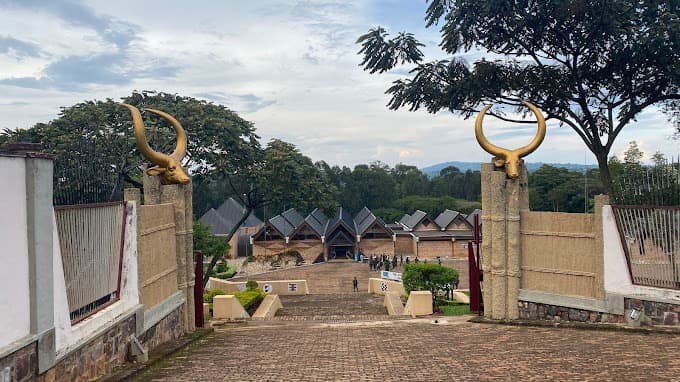
Located in Huye in southern Rwanda, the Ethnographic Museum brings together in seven galleries the country's richest heritage collection.
The Ethnographic Museum of Huye, also known as the National Museum of Rwanda, houses the country's most comprehensive heritage collection. Located in the former Butare, approximately 130 km south of Kigali, it comprises seven thematic galleries dedicated to geography, agriculture, crafts, architecture, games and Rwandan oral traditions. The site spans some twenty hectares planted with indigenous species.
Why visit the Ethnographic Museum
The museum represents the most structured entry point for understanding Rwandan culture in its historical depth. Three main reasons justify the journey to Huye:
- Complete scenography: seven permanent galleries covering all ethnographic themes, from the country's topography to ritual practices—a rarity in East Africa.
- Iconic pieces: full-scale reconstruction of a royal hut, wooden shields of intore dancers, demonstration of banana beer brewing.
- A living site: performances by intore dancers and percussionists organized on-site, a traditional crafts training center active since the late 1990s.
A history tied to Belgian-Rwandan cooperation
The first collections were assembled in 1955, following King Baudouin of Belgium's visit to Rwanda. The idea of a national museum was officially launched in 1972, but construction of the buildings began only in 1987. The inauguration took place on September 18, 1989, in the presence of Belgian Prime Minister Wilfried Martens, as part of the commemoration of Rwanda's 25 years of independence.
The institution is today one of seven national museums managed by the Institution of National Museums of Rwanda (INMR). The site also carries the memory of a tragic episode: during the 1994 genocide, Queen Mother Rosalie Gicanda, the last wife of King Mutara III Rudahigwa, was assassinated in Butare. A stele commemorates the victims connected to the location.
The seven exhibition galleries
The permanent collection follows a thematic progression. Plan 1.5 to 2.5 hours to visit with a guide.
- Gallery 1 — Reception and shop: artisanal objects for sale, publications in English, brochures on Rwanda.
- Gallery 2 — Geography and environment: large topographic map of the country, highlighting relief, watersheds and ecosystems.
- Gallery 3 — Subsistence activities: livestock, agriculture, hunting, gathering and tools. The detailed presentation of banana beer brewing is a highlight.
- Gallery 4 — Domestic crafts: pottery, basketry, leatherwork, woven mats, and the wooden shields worn by intore dancers.
- Gallery 5 — Traditional architecture: full-scale reconstruction of a royal hut in plant materials.
- Gallery 6 — Games, sports and dances: costumes and accessories of Rwandan folk dances.
- Gallery 7 — Oral tradition and the supernatural: pastoral poetry, tales, beliefs and rituals.
An annex hall hosts temporary exhibitions and a local crafts sales area.
Practical information
The museum is open daily with extended hours (morning through late afternoon). It closes on April 7, the national genocide commemoration day. On Saturdays during Umuganda (the last Saturday of each month), opening is delayed until late morning to respect the mandatory community work morning.
English-speaking guides are available on-site and their accompaniment is highly recommended to grasp the context of the displayed objects. Performances by intore dancers can be reserved in advance for groups.
When to visit
The museum can be visited year-round, but two factors merit consideration:
- Seasons: the long dry season (June to September) and the short dry season (mid-December to mid-February) facilitate travel from Kigali. During the rainy season (March-May and October-November), the RN1 remains passable but journeys take longer.
- Days to avoid: the morning of the last Saturday of the month (Umuganda) as well as the genocide commemoration week in April, when cultural activities are restricted throughout the country.
How to get there
From Kigali by car
Plan 2 to 3 hours of driving via RN1, passing through Muhanga. The road is entirely paved and well signposted. A rental car with driver remains the most comfortable option for combining the museum with other southern sites.
By bus
Several companies (Volcano, Horizon, Ritco) operate daily service between Kigali and Huye from Nyabugogo bus station. The journey takes approximately 3 hours.
On site
Once in Huye, the museum is located just minutes from the town center. Moto-taxis, locally called boda-boda, as well as regular taxis, handle the final leg of the journey.
What to see nearby
The Huye region allows you to extend your visit with other cultural and memorial sites:
- Huye Central Market: daily life, agricultural products and local crafts.
- The Benedictine Monastery of Gihindamuyaga: monastic community, gardens and shop selling monastic products.
- The Royal Palace of Nyanza: reconstructed former royal residence, about forty kilometers to the north.
- The Murambi Genocide Memorial: major memorial site, approximately 40 km to the southwest.
To complement the memorial dimension of your journey, the Kigali Genocide Memorial and the Mbyo reconciliation village offer additional insight into contemporary Rwanda.
Frequently asked questions
Frequently asked questions
Plan 1.5 to 2.5 hours with a guide to tour the seven permanent galleries. Add 30 minutes if you wish to watch a demonstration of intore dances or stroll through the park.
Yes, the museum is open daily, except on April 7 (national commemoration day). On Saturdays during Umuganda (the last Saturday of the month), opening is delayed until late morning.
Photography without flash is generally permitted in the exhibition galleries. Confirm with your guide at the entrance, as certain pieces may be subject to restrictions.
It is possible, but accompaniment by a museum guide is highly recommended: most of the displayed objects gain meaning through explanations of ritual, social and technical uses.
Yes, the presentation remains accessible and the gallery dedicated to traditional games particularly interests younger visitors. Intore dance performances, when scheduled, often leave lasting impressions.
Planning your Rwanda trip
The Ethnographic Museum fits naturally into an itinerary combining the country's recent history, the royal culture of the south and the natural parks of the north and east. To build a tailor-made circuit including Huye, Nyungwe or the Volcanoes National Park, consult our Rwanda trips designed with our local agencies.
Interested in this visit?
We can include it in your personalised itinerary.