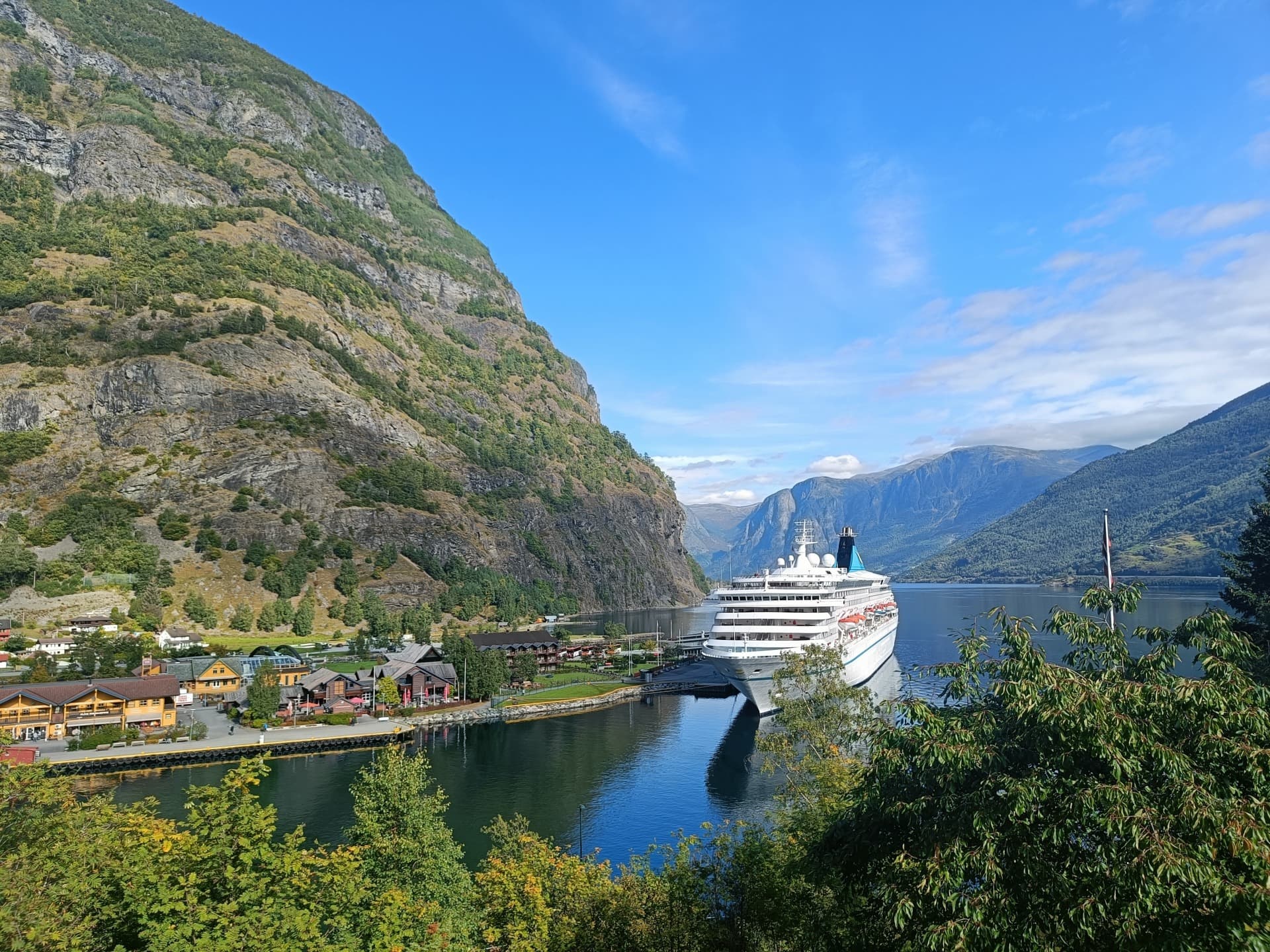
Sognefjord
Sognefjord
Norway's longest and deepest fjord, Sognefjord stretches for 200 km between the coast and Jotunheimen National Park, from Nærøyfjord to Jostedalsbreen glacier.
Sognefjord is Norway's most extensive and deepest fjord. It extends over 200 kilometres from the western coast to the mountains of Jotunheimen National Park, passing through port villages, glacial valleys and secondary arms listed as UNESCO World Heritage sites. This guide brings together the essentials for planning a visit: historical landmarks, sites to see, best times to go and access routes.
Why visit Sognefjord
Sognefjord concentrates the diversity of western Norway's landscapes along a single route: deep waters (exceeding 1,300 metres in places), rocky cliffs, high-altitude glaciers, farming villages and wooden heritage architecture. Its secondary arms, such as Nærøyfjord and Aurlandsfjord, offer some of the most dramatic scenery. Access routes are numerous (train, ferry, road), making it one of the easiest fjords to incorporate into an itinerary between Oslo and Bergen.
History and geology
A valley shaped by glaciers
Sognefjord was formed 10,000 to 15,000 years ago during the last ice age. It was carved by massive glaciers that excavated a U-shaped valley below sea level. Jostedal Glacier, still active today, is a testament to this geological history.
From Viking settlement to tourism
The fjord's shores were occupied from the Stone Age, then exploited by Iron Age farmers and Vikings, who used its waters as a trade and expedition route. Christianization, beginning in the 11th century, left notable architectural heritage, including the Kaupanger wooden church dating from the 12th century. From the late 19th century onwards, the fjord attracted European travellers and mountaineers; the opening of the Flåmsbana railway line in 1940 subsequently made its heart accessible year-round.
What to see at Sognefjord
Nærøyfjord
A narrow arm of Sognefjord, Nærøyfjord has been a UNESCO World Heritage site since 2005. Only 250 metres wide in places, it can be explored by ferry or kayak between Gudvangen and Flåm.
Balestrand
A village on the northern shore, Balestrand is known for its artistic heritage and the Kviknes Hotel, an Art Nouveau masterpiece. It's a convenient base for exploring the fjord's secondary arms.
Jostedalsbreen Glacier
Jostedalsbreen is mainland Europe's largest glacier. Several of its glacier tongues descend into valleys north of Sognefjord and can be visited with a local guide.
Borgund wooden stave church
Built in the late 12th century (around 1180), Borgund wooden stave church is one of the best-preserved examples of this medieval Norwegian architecture, with its carved dragons and tiered roof.
Stegastein viewpoint
A wooden platform suspended 650 metres above Aurlandsfjord, Stegastein is reached by car or bus from Flåm. It's one of the region's most accessible vantage points.
When to visit
- Spring (April–May): waterfalls at peak flow after snowmelt, moderate crowds. Some high mountain passes remain closed.
- Summer (June–August): longest daylight hours, mild temperatures, cruises and trains at full capacity. Notable crowds at Flåm and on Nærøyfjord.
- Autumn (September–October): forest colours, reduced crowds, more unpredictable weather.
- Winter (November–March): snow-covered scenery, cross-country skiing, possible Northern Lights viewing on clear nights. Several seasonal connections are suspended.
Practical information
- Duration of visit: allow a minimum of 2 days to combine a cruise, train and a village. A more thorough exploration requires 4 to 5 days.
- Admission prices: moderate entry fees for wooden stave churches, separate tickets for the Flåm railway and Nærøyfjord cruises.
- Accommodation: Flåm, Balestrand, Aurland and Sogndal have the most choice. Booking recommended during peak season.
- Equipment: waterproof clothing and warm layers useful year-round, even in summer.
How to get there
- By train: the Bergen Railway connects Oslo to Bergen via the Hardangervidda plateau and serves Myrdal, where you board the Flåmsbana, a 20 km line descending to Flåm on the fjord's edge.
- By boat: express ferries from Bergen to Flåm, Balestrand and Sogndal.
- By car: scenic routes from Bergen (approximately 4–5 hours) or Oslo (6–7 hours depending on route), with ferry crossings on certain sections.
- By plane: international flights to Oslo or Bergen, then onward connection to Sogndal to save time.
Locally, buses, ferries and regional trains serve the main villages. Car hire remains useful for reaching side valleys and hiking trailheads.
Things to see nearby
- Geirangerfjord, another UNESCO-listed fjord, to the north-west.
- Bryggen, Bergen's Hanseatic quarter, a frequent entry point for Sognefjord visits.
- Bergen Fish Market, ideal to combine with an overnight stay before crossing.
- Hardanger Bridge, on the route to the neighbouring Hardangerfjord.
Frequently asked questions
Frequently asked questions
Preparing your trip
Sognefjord fits easily into a circuit connecting Oslo, Bergen and western fjords. To build a tailor-made itinerary, consult our Norway travels.
Interested in this visit?
We can include it in your personalised itinerary.