Bryggen
Bryggen
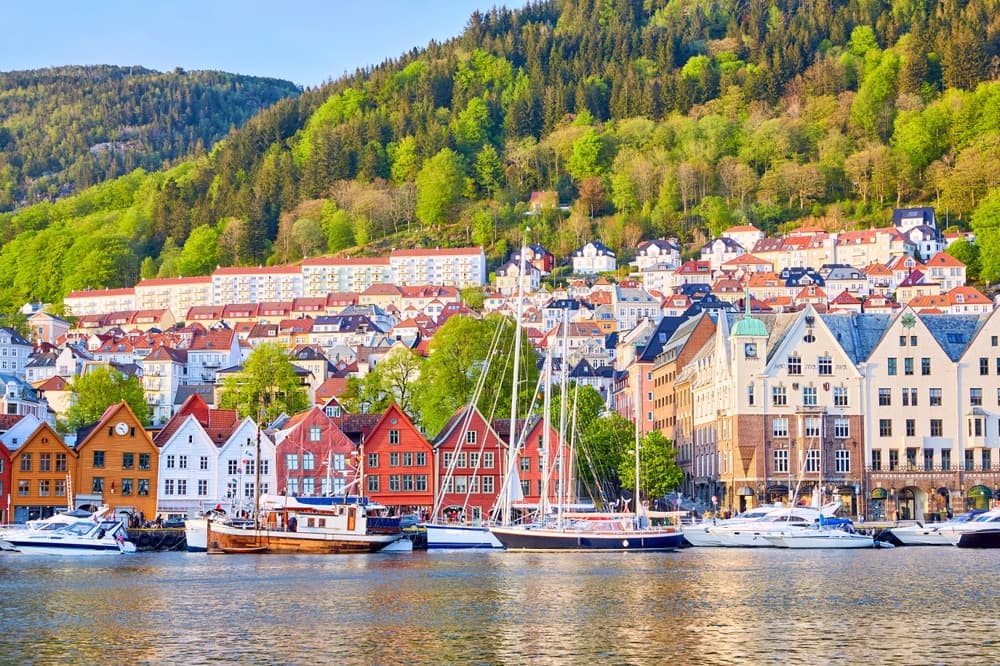
A former Hanseatic trading post in Bergen and UNESCO World Heritage site, Bryggen has lined its colorful wooden houses along the inner harbor since the 12th century.
Bryggen is the historic Hanseatic quarter of Bergen, on Norway's west coast. Stretched along the inner harbor (Vågen), it features rows of wooden buildings with colorful facades, remnants of a trading post founded in the 12th century. The site has been inscribed on the UNESCO World Heritage list since 1979.
Why visit Bryggen
Bryggen offers a rare testament to medieval wooden urban architecture in Northern Europe. Behind the red, ochre, and white facades that adorn Bergen's postcards lies a maze of narrow alleyways, wooden walkways, and tiered warehouses, still largely occupied by artisans, galleries, and small shops. Exploration is free and on foot, allowing you to combine historic urban design, thematic museums, and direct access to the waterfront.
History of the Hanseatic quarter
Founded in the 12th century, Bryggen became Bergen's commercial hub during the Middle Ages, when the city was a major center in the Kingdom of Norway. From the 14th century onward, the Hanseatic League established a trading post here, where German merchants resided. The quarter became the pivotal point for the stockfisch (dried cod) trade, brought from the Lofoten Islands and exported throughout Europe.
Several fires ravaged the site over the centuries. After each disaster, buildings were reconstructed on the same plots using identical timber-frame techniques, which explains the visual consistency seen today. The last major fire, in 1955, destroyed part of the quarter; not all affected sections were rebuilt exactly as before. Since the 1960s, successive conservation projects have worked to stabilize remaining buildings, treat the wood, and document the archaeological subsurface.
What to see at Bryggen
- The inner alleyways: between the waterfront facades lie wooden passages housing jewelry workshops, wool shops, and art galleries. You are free to wander through them.
- Bryggen Museum: showcasing archaeological excavations from the quarter, everyday medieval artifacts, and the site's urban evolution.
- The Hanseatic Museum: housed in a former merchant's house, it recreates the life and organization of German traders on site (subject to closure during restoration periods depending on the season).
- The fish market (Fisketorget): just a short walk away on the opposite quay, offering fresh seafood, fish soup (fiskesuppe), and salmon.
- The Bergenhus fortress: at the northern end of the harbor, one of Norway's best-preserved medieval fortified complexes.
Practical information
The quarter is open to the public 24/7: you can explore at any time. Museums and shops follow their own schedules, generally more limited in winter. Plan for 1 to 2 hours for an exterior visit, and a half-day if you include one or two museums. The ground is paved and wooden surfaces can become slippery in rain: wear appropriate footwear. Some of the interior passages feature steps and thresholds that are not wheelchair-accessible.
When to visit
June to August offers the longest days and mildest temperatures, but also the highest visitor numbers, particularly during cruise ship calls. May and September are good alternatives, with fewer crowds and still pleasant weather. In winter, Bergen remains accessible and the quarter retains all its visual appeal under more contrasted lighting; however, you should expect high rainfall year-round and very short days from November through February.
How to get there
- By air: Bergen-Flesland Airport (BGO) is connected to numerous European cities. From the airport, the Bybanen (light rail) reaches the city center in about thirty minutes; express buses and taxis provide additional options.
- By train: the Oslo–Bergen line, one of Scandinavia's most famous rail routes, crosses the Hardangervidda plateau in approximately 6 to 7 hours.
- By ferry: Bergen is served by coastal connections (Hurtigruten) and ferries from other Norwegian ports and, depending on the season, from Denmark.
- On foot from the city center: Bryggen is a 5–10 minute walk from the train station and fish market.
Nearby attractions
- Mount Fløyen: accessible in minutes by funicular from the city center, offering an unobstructed view of the city and fjords.
- The Nordnes quarter: a residential peninsula with wooden houses, pleasant for walking to the aquarium.
- The Bergenhus fortress: at the entrance to the harbor.
- Fjord excursions: Bergen is the departure point for cruises to the Sognefjord and Hardangerfjord.
Frequently asked questions
Frequently asked questions
Yes. The quarter is an open urban space, freely accessible at all times. Only the museums (Bryggen Museum, Hanseatic Museum) and certain guided tours charge admission.
Plan for 1 to 2 hours to explore the alleyways and waterfront, and a half-day if you add a museum and the nearby fish market.
Yes. The quarter remains accessible year-round. The wooden facades take on a different character in winter light, but days are short and rain is frequent: dress appropriately for the weather.
Plan your visit
Bryggen fits naturally into a stay in Bergen and more broadly into an itinerary along the west coast fjords. To build your custom-made journey, explore our Norwegian tours.
Interested in this visit?
We can include it in your personalised itinerary.