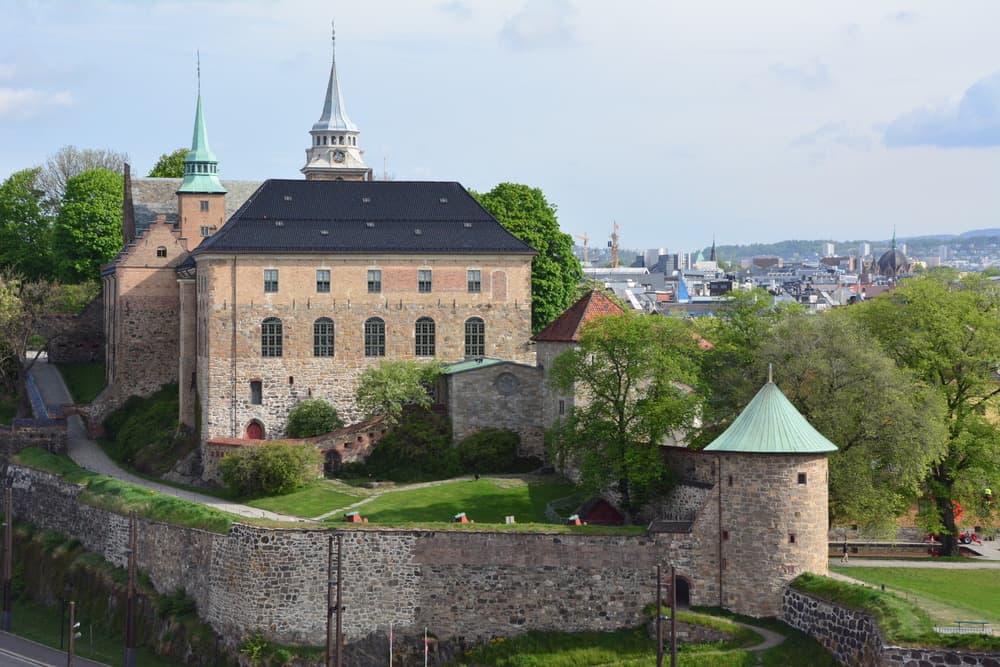
Akershus Fortress
Akershus Fortress
A 13th-century citadel overlooking Oslo Fjord, Akershus houses military museums, a Resistance memorial and a royal crypt. Complete visitor's guide.
Rising from a promontory overlooking Oslo Fjord, Akershus Fortress has watched over Norway's capital since the 13th century. A medieval citadel transformed into a Renaissance castle, a theater of executions during Nazi occupation and today a museum complex and venue for state ceremonies, it concentrates seven centuries of Norwegian history on a single site, just fifteen minutes' walk from the central station.
Why visit Akershus Fortress
Akershus is not merely a medieval ruin. It is an active military site, managed by the Norwegian armed forces, combining several functions: a military history museum, a World War II memorial, government reception halls and a royal crypt. Entry to the grounds is free, making it one of Oslo's most accessible attractions.
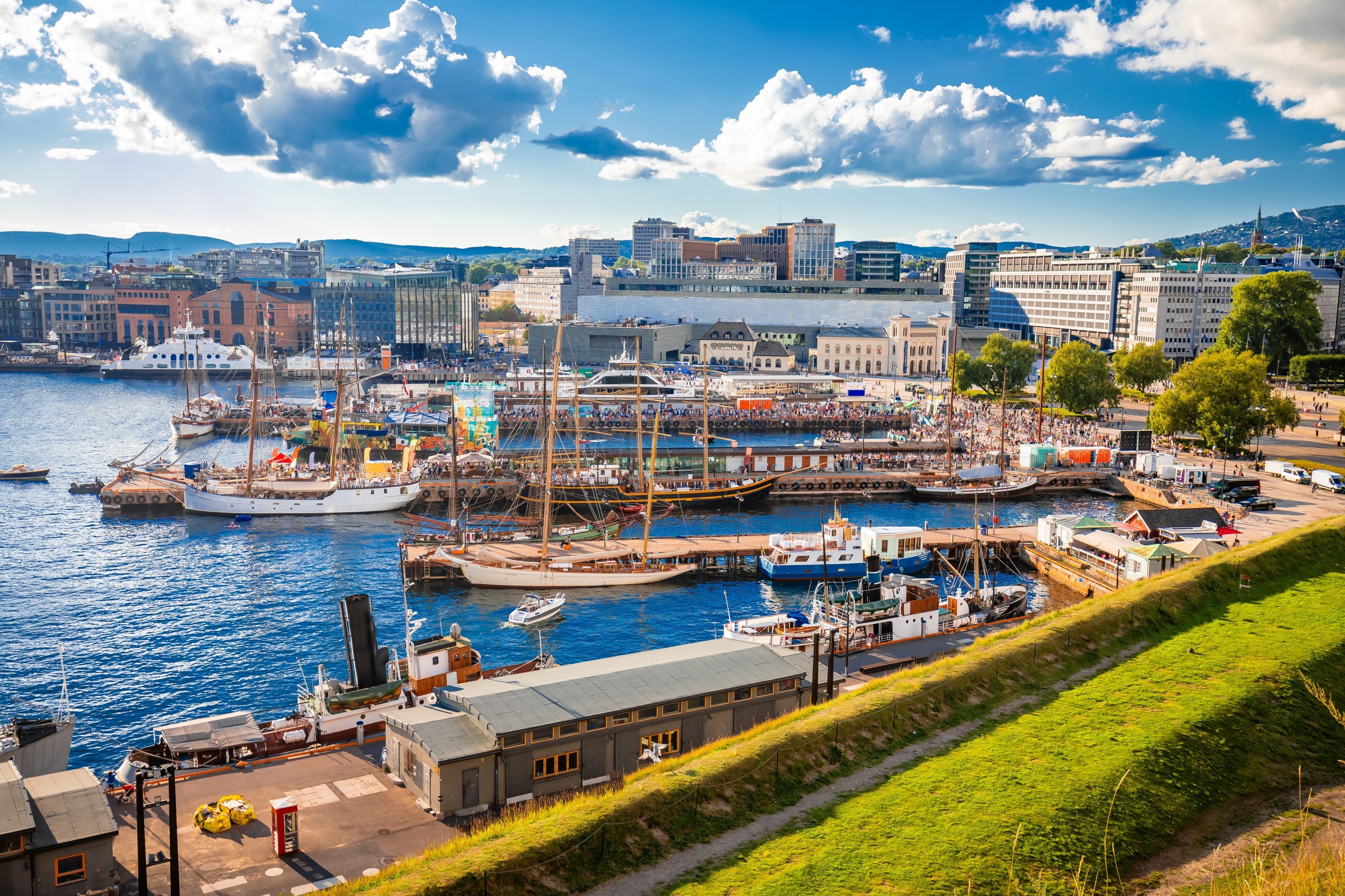
The site also offers direct views over the fjord, the opera house and Aker Brygge quays. The fortress's commanding position, originally chosen for its defensive value, makes it today one of the city center's finest vantage points.
History: seven centuries of power and remembrance
The fortress was built in the late 13th century under the reign of Håkon V, who decided to move the kingdom's capital from Bergen to Oslo and needed a stronghold to defend it. Initially a medieval stone castle, it withstood several Swedish sieges over the following centuries.
In the early 17th century, King Christian IV transformed the structure into a Renaissance castle following a fire that destroyed the old town of Oslo. He had the city rebuilt at the foot of the fortress and renamed it Christiania. Akershus gradually lost its defensive function in the 19th century to become a ceremonial site.
The darkest chapter unfolded during World War II. Under Nazi occupation, the fortress served as a prison and execution site. In 1942, several Norwegian resistance fighters were shot there. A Patriots' Memorial is today dedicated to them on the very site of the executions. After liberation, the fortress was where the main collaborators, including Vidkun Quisling, were tried and executed.
What to see on site
The castle and state rooms
A tour inside the castle provides access to the royal crypt, where several Norwegian monarchs rest including Håkon VII and Olav V, as well as the state rooms used by the government for official receptions. The architecture blends medieval elements with Renaissance refinements commissioned by Christian IV.
The Armed Forces Museum (Forsvarsmuseet)
Housed in the former arsenal, this museum traces Norwegian military history from the Viking era to contemporary operations. Weapons, uniforms and models document in particular the wars with Sweden and Norway's involvement in 20th-century conflicts. Admission is free.
The Norwegian Resistance Museum (Hjemmefrontmuseet)
Located in a building adjacent to the 1942 execution site, this museum documents German occupation from 1940 to 1945 and the organization of the domestic resistance (Hjemmefronten). Reconstructions, archives and personal testimonies make it particularly comprehensive. Allow at least an hour for a visit.
The ramparts and Patriots' Memorial
A free walk along the ramparts allows you to circle the fortifications with views over the fjord. The Patriots' Memorial, soberly marked by a stele, indicates where resistance fighters were shot in 1942.
Practical information
Access to the fortress's outer grounds (courtyard, ramparts, gardens) is free and open daily from morning until late evening. The museums and interior castle rooms are paid attractions individually, with moderate rates; a combined ticket is generally available.
The visitor center, located near the Karpedammen basin at the main entrance, provides maps, brochures and information about guided tours. Allow two to three hours for a comprehensive visit including one museum, longer if you wish to see both museums and the castle interior.
The site is partially paved with large stone blocks: wear appropriate footwear. Part of the ramparts is wheelchair accessible, but access to the crypt and certain interior rooms remains limited.
When to visit
The best period runs from May through September, when days are long and outdoor spaces are particularly pleasant. July sees peak tourist numbers: aim for the morning to avoid crowds in the museums. Outside peak season, the exterior remains accessible but some museums operate on reduced schedules and the castle sometimes closes on weekdays. The changing of the guard, organized daily at midday, draws a regular audience.
How to get there
- On foot: approximately fifteen minutes from Oslo Central Station (Oslo S), via the pedestrian Karl Johans gate quarter and the waterfront.
- Tram: line 12, Kontraskjæret stop, a few minutes' walk from the main entrance.
- Ferry: ferries to the Oslo Fjord islands depart from Aker Brygge quay, just below the fortress.
- Car: parking is available on Akershusstranda, along the waterfront; parking in central Oslo remains expensive and limited.
What to see nearby
The fortress combines well with other city center sites in a single day. A few minutes' walk away, Oslo City Hall houses the hall where the Nobel Peace Prize is awarded each year. The Aker Brygge district, just to the west, groups restaurants and the Astrup Fearnley Museum. More broadly, the Oslo destination page details other must-sees in the capital. To further explore Norwegian strongholds, Bergenhus Fortress in Bergen offers an interesting parallel on the west coast.
Frequently asked questions
Including Akershus in a Norwegian journey
The fortress is a logical stop on an Oslo visit, either at the start or end of your itinerary. Our tailor-made Norway travel itineraries feature the capital with its historic sites, before heading to the west coast fjords, Geirangerfjord or Arctic regions according to your wishes.
Interested in this visit?
We can include it in your personalised itinerary.