Nyungwe National Park
Nyungwe National Park
A UNESCO-listed tropical montane forest, Nyungwe National Park is home to 13 primate species, over 300 bird species, and 130 km of trails between Kigali and the Congolese border.
Located in southwestern Rwanda, Nyungwe National Park stands as one of Africa's most precious treasures. Spanning approximately 1,020 km², it shelters one of the continent's oldest tropical mountain forests. This remarkable ecosystem has endured through the ages despite the climatic shifts that have transformed Africa. Nyungwe is a true paradise for nature lovers, scientists, and adventurers alike. The park offers rich biodiversity and unforgettable experiences.
History
The exact age of Nyungwe Forest remains difficult to pinpoint. Evidence of human occupation in the region dates back roughly 50,000 years. However, during the 21st century, the forest suffered severely from deforestation, wildfires, and intensive hunting. This led to the complete extinction of buffalo and elephants in the area.
Nyungwe was declared a forest reserve in 1933. It experienced a long conservation history before receiving its national park status in 2005. This largely intact forest is one of the last great tropical mountain forests in Africa. It is regarded as a refuge for plant and animal species found nowhere else in the world.
The park sits at the border between Rwanda, Burundi, and the Democratic Republic of the Congo. Its role in protecting the region's watersheds makes it an area of strategic ecological importance. Nyungwe is also the source of numerous tributaries of the Congo River and the Kagera River, which feed the Nile. This crucial hydrological role allows the park to regulate local climate and supply approximately 70% of fresh water for millions of people across Rwanda.
Climate
Nyungwe sits at an altitude ranging between 1,600 and 2,950 meters, creating a tropical mountain climate. The forest is often shrouded in mist, creating a mystical atmosphere. Rainfall is abundant throughout the year. Temperatures typically fluctuate between 10°C and 25°C, fostering conditions that support lush and diverse vegetation.
Unique Ecosystem
Nyungwe National Park is renowned for its extraordinary biodiversity. Indeed, its exceptional ecosystem attracts growing numbers of visitors each year.
Varied Vegetation
Nyungwe National Park boasts remarkable botanical richness. It is home to over 1,000 plant species, including 200 tree varieties and more than 200 orchid and fern species. The dense canopy is dominated by trees such as:
- Strangler figs
- Podocarpus
- Syzygium
This botanical wealth plays an essential role for the numerous animal species inhabiting the forest.
Primates
Nyungwe is primarily celebrated for its primate population. The park is home to 13 different primate species, making it one of Africa's richest regions for primates. The park notably harbors chimpanzee populations, one of the main attractions for visitors. These primates live in deep forests and are regularly observed by trekking groups.
Other primate species found here include:
- Black and white colobus monkeys
- Mona monkeys
- L'Hoest's monkeys
- Olive baboons
- Blue monkeys
- Grey-cheeked mangabeys
- Owl-faced monkeys
- Golden monkeys
Angolan colobus, often seen in large troops of several hundred individuals (reaching up to 300), are particularly impressive.
Birds
The park is also a paradise for birdwatchers, with over 300 bird species recorded. About thirty of these are endemic to the Albertine Mountains region. Among Nyungwe's emblematic birds are:
- Grauer's swallow
- Rwenzori turaco
- Great blue-bellied turaco
- Crowned eagle
- Chestnut-winged starling
- Blue-headed sunbird
These birds hide within the canopy, offering exceptional observation opportunities for avian wildlife enthusiasts.
Other Animals
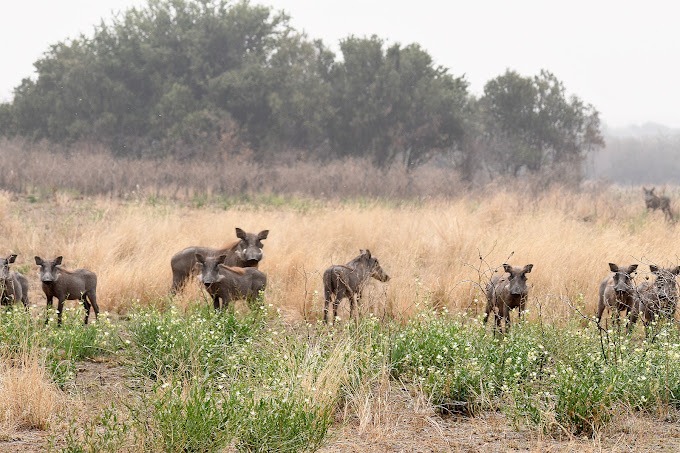
While primates and birds attract the majority of visitors, Nyungwe National Park is also a refuge for other remarkable wildlife. The park is home to approximately 80 mammal species, including:
- Giant forest hogs
- African civets
- Mongooses
- Leopards
- Genets
- Side-striped jackals
- Yellow-backed or red-backed duikers
It is also possible to spot 300 rare butterfly species, 30 to 40 reptile varieties, and various amphibians and insects.
How to Get There
Nyungwe National Park is accessible from Kigali, with a drive lasting 4 to 5 hours. From the town of Butare, the journey takes 1.5 hours. The route is scenic and picturesque. You can rent a vehicle or use private transport services to reach the park. Additionally, for those seeking a more comprehensive experience, several travel agencies organize guided circuits that include transportation, accommodation, and Nyungwe visits.
Nyungwe National Park Today
Despite its protected status, Nyungwe faces several challenges. One of the primary threats is deforestation caused by human activities on the park's periphery. Poaching, though diminished, remains a problem for certain animal species.
Following the success of its partnership with the RDB (Rwanda Development Board) in managing Akagera National Park, African Parks was approached by the Rwandan government in 2020. This initiative led to the signing of a 20-year management agreement for Nyungwe National Park.
Thus, continuous conservation efforts are being deployed to protect this natural heritage. The Rwandan government and various international organizations have implemented conservation programs (such as Nyungwe Nziza) aimed at:
- Preserving endangered species
- Strengthening site surveillance
- Combating deforestation
- Promoting sustainable development of local communities
In 2023, Nyungwe National Park was inscribed as a UNESCO Natural World Heritage Site.
Activities and Attractions
Nyungwe National Park offers numerous activities and attractions for discovering the beauty of its landscapes and the richness of its biodiversity. Here are some of the must-do experiences:
Hiking
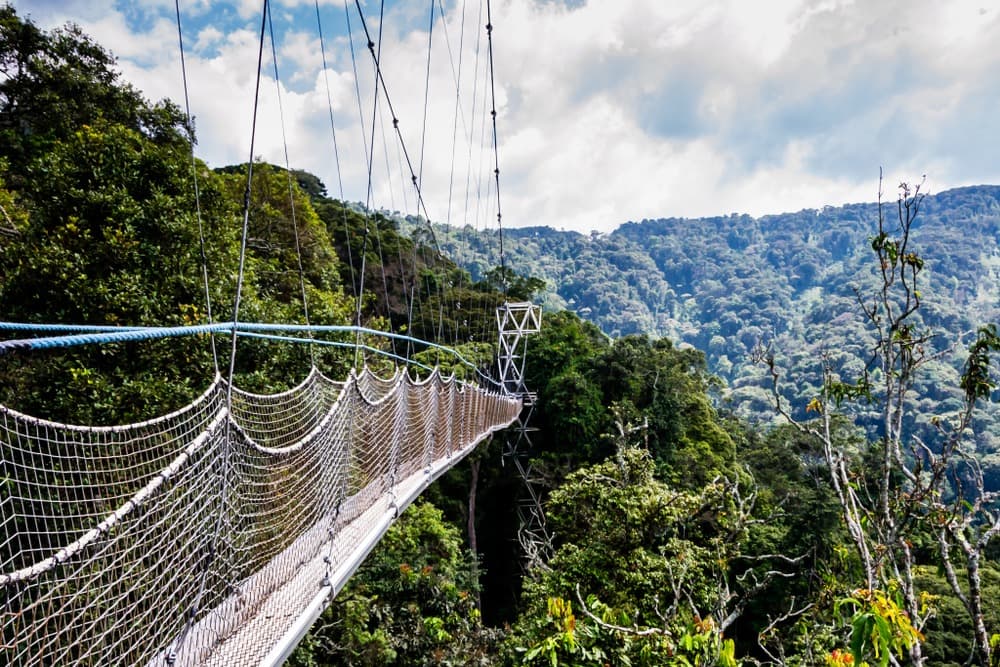
The park boasts over 130 km of hiking trails, each offering a unique view of the forest and its inhabitants. The most popular route is the canopy walk. This suspended walkway sits 50 meters above ground and stretches approximately 90 meters in length. From this vantage point, visitors can admire primates moving through the tree canopy, singing birds, and more. Other trails lead visitors through waterfalls (Isumo, Kamiranozu, and Ndambarare), peat bogs, and deep forests.
Chimpanzee Trekking
Chimpanzee trekking is one of the park's flagship activities. Visitors have the opportunity to set out at dawn with experienced guides to locate and observe chimpanzees in their natural habitat. It is an unforgettable experience that allows you to witness the fascinating social interactions of these intelligent primates.
Birdwatching
Birdwatchers will find their paradise in Nyungwe, with circuits specially designed to discover rare bird species. Specialized guides help visitors spot some of the region's most elusive species and better understand their behavior.
Cultural Experiences
Beyond its natural riches, Nyungwe National Park is also surrounded by villages, notably Banda Village and Kitabi Cultural Village. Visitors can discover Rwandan cultural traditions here. Several experiences allow you to meet local communities and learn more about their practices. Examples include basket weaving or banana beer production, traditional dance, or tea cultivation and preparation.
Want to discover this destination?
Our local advisors design your tailor-made trip.