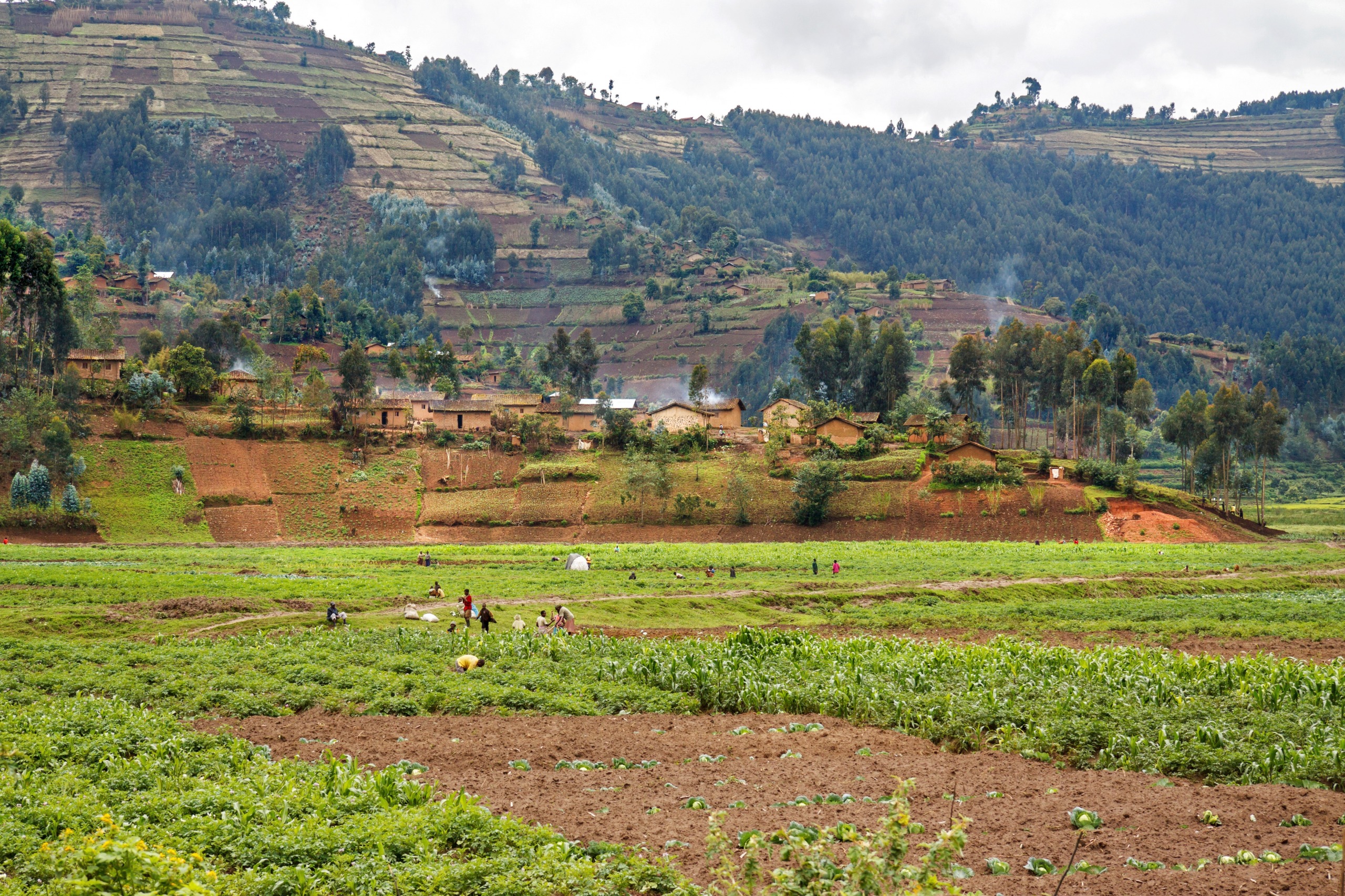
Nyungwe Forest National Park
Nyungwe Forest National Park shelters one of East Africa's largest mountain rainforests. Chimpanzees, Angola colobus, canopy walkway and exceptional biodiversity in southwestern Rwanda.
Nyungwe Forest National Park encompasses one of East Africa's largest mountain rainforests, sprawling across southwestern Rwanda. Perched between 1,600 and 2,950 meters in elevation, it harbors thirteen primate species, including chimpanzees and Angola colobus, alongside exceptional bird and orchid diversity. It is the only place in Rwanda where you can observe chimpanzees in the wild.
Quick Facts
- Entrance: paid entry — permits required for trekking, chimpanzee tracking, and canopy access
- Access: national highway RN1 from Kigali (approximately 5–6 hours) or from Huye/Butare (approximately 2 hours)
- Recommended duration: minimum 2 to 3 days to combine chimpanzees, canopy, and hikes
- What to wear: long clothing, waterproof jacket, hiking boots — the forest is humid year-round
- Accessibility: very limited due to mountainous terrain and unmanicured trails
- Booking: chimpanzee tracking permits should be reserved in advance through the Rwanda Development Board (RDB)
What You'll See
Nyungwe Forest is a stratified ecosystem: dense understory, canopy reaching 50 meters high, bamboo groves, and alpine meadows at higher altitudes. More than 300 bird species are recorded here, including several endemic to the Albertine Rift. Wild orchids cloak tree trunks, and colorful butterflies abound along the trails.
Angola colobus move in groups that can exceed 300 individuals — among Africa's largest primate congregations. Chimpanzees, more elusive, require guided tracking lasting several hours.
History and Context
Nyungwe was classified as a forest reserve during the Belgian colonial era. It became a national park in 2004. The forest serves as a vital water tower for Rwanda: it feeds the Nile via the Akagera River and the Congo via the Ruzizi. Its preservation is directly tied to the region's water security.
Paleobotanical studies indicate this forest survived Pleistocene drought periods, explaining its wealth of relict species.
Highlights of a Visit
Chimpanzee Tracking
Groups of chimpanzees habituated to human presence occupy certain zones of the park. Ranger-guided tracking lasts between two and six hours depending on animal location. Observation is limited to one hour per group per day to minimize primate stress.
Canopy Walkway
A suspended walkway traverses the canopy roughly 50 meters above ground. It offers sweeping views of the forest and allows observation of birds and colobus monkeys at canopy level. It ranks among Central Africa's rare structures of this kind.
Hikes and Marked Trails
The park offers several marked circuits, from short trails spanning a few hours to multi-day treks crossing different vegetation layers. The trail to Mount Bigugu, the park's highest point, delivers unobstructed views across Rwanda's hills and, on clear days, Lake Kivu.
Birdwatching
Nyungwe ranks among East Africa's premier birding destinations. Albertine Rift endemics — such as Grauer's greenbul and Ruwenzori turaco — draw ornithologists worldwide. Dawn offers optimal viewing conditions.
Photography Tips
Dense forest light is dim: favor a bright lens (f/2.8 or faster) and elevated ISO sensitivity. Early morning mist creates distinctive atmospheres over the canopy. On the walkway, backlighting in late afternoon reveals foliage texture. For chimpanzees, avoid flash — it's prohibited and disturbs the animals.
Location and Access
The park spans the border between Rwanda's Southern and Western provinces, adjoining the Democratic Republic of Congo and Burundi. The primary entry point is the Uwinka visitor center on RN1. From Kigali, allow approximately five to six hours driving time. The town of Huye (Butare) serves as a convenient base for organizing your visit.
No direct public transport serves the park; a 4×4 vehicle is recommended, especially during the rainy season. Lodges and camps are situated inside or bordering the park.
Nearby Attractions
- Huye (Butare) — university town housing Rwanda's National Museum, roughly two hours northeast.
- Lake Kivu — large rift lake to the west, accessible from Cyangugu/Rusizi on the park's edge.
- Rusizi (Cyangugu) — border town with the DRC, departure point for exploring Lake Kivu's shoreline.
Frequently asked questions
The forest is accessible year-round. Dry seasons (June–September and December–February) ease hiking and trails are less slippery. Chimpanzees remain present in all seasons.
Yes, chimpanzee tracking and canopy access permits are limited in number. It is strongly advisable to reserve them through the Rwanda Development Board (RDB) before arrival, especially during peak season.
Long clothing covering arms and legs (protection against insects and nettles), lightweight waterproof jacket, waterproof hiking boots with treaded soles. The forest is humid even in the dry season.
Yes. A classic itinerary pairs Nyungwe (chimpanzees) with Volcanoes National Park (mountain gorillas) in the north. Plan for a minimum of five to six days for both destinations.
Photography is permitted, but flash is strictly prohibited. Rangers review rules before departure. Maintain the mandated distance from animals.
Several lodges and camps are situated within or on the park's fringes, offering varying comfort levels. Reserve in advance, especially during high season.
Want to discover this destination?
Our local advisors design your tailor-made trip.