Climate and Best Time to Visit Rwanda
Nicknamed the "land of a thousand hills," Rwanda offers pleasant weather year-round, ideal for discovering its stunning landscapes and exceptional wildlife. Timing your visit to the right season will make your exploration of this East African nation even more memorable.
Nicknamed the "land of a thousand hills," Rwanda offers pleasant weather year-round, ideal for discovering its stunning landscapes and exceptional wildlife. Timing your visit to the right season will make your exploration of this East African nation even more memorable. Here's everything you need to know.
What is the Climate Like in Rwanda?
Located near the equator, Rwanda enjoys a high-altitude tropical climate. Thanks to an average elevation of 1,500 meters, temperatures remain stable, ranging from 15°C at night to 30°C during the day.
The cool mornings and evenings are ideal for outdoor activities.
Weather by Region
To the east, toward Akagera National Park, temperatures often reach 30°C, creating an ideal setting for observing zebras and antelopes across the savanna.
In the northwest, in the Virunga Mountains, it's cooler, around 15°C.
At 2,500 meters elevation, hikers should pack warm clothing.
Near Lake Kivu in the west, the climate is mild, perfect for water activities.
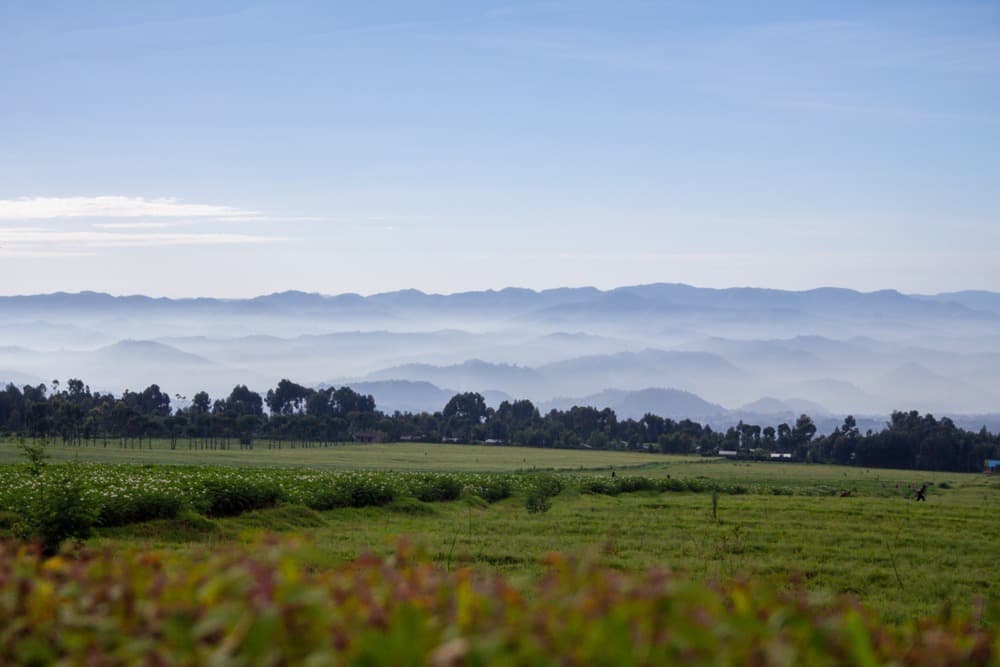
In the south, the Nyungwe Forest creates a distinctive climate, with misty mornings and sunny afternoons.
Temperatures Month by Month
Temperatures in Rwanda remain consistent throughout the year.
In February, the average is 26°C, while March sees a slight dip to 24°C.
In April and May, temperatures are mild, around 23°C.
June marks a slight cooling to 21°C, followed by July and August at 20°C.
In September, temperatures gradually rise to 22°C. The final months of the year remain steady: October and November average 25°C, and December reaches 27°C.
Rainfall by Region
Rainfall in Rwanda varies considerably by region.
The west and northwest, near Lake Kivu, receive the heaviest precipitation, exceeding 2,500 mm annually.
The central zone experiences moderate rainfall, around 1,000 mm per year.
Toward the east, precipitation is lighter, not exceeding 700 mm in the eastern plains.
Rwanda's 4 Seasons
The year in Rwanda divides into four seasons.
From February to May, the long rainy season paints the landscape in lush green thanks to abundant rainfall that nourishes vegetation.
From June to August, the first dry season offers clear skies and ideal conditions for observing mountain gorillas in Volcanoes National Park or hiking.
From September to December, a second rainy season, lighter in nature, brings regular showers.
Finally, January represents a short dry season, perfect for safaris in the eastern part of the country and wildlife viewing.
The Long Dry Season from June to September
This period is ideal for discovering the country. Pleasant temperatures around 25°C and dry air create perfect conditions for wildlife observation.
Mornings begin under clear skies, and afternoons benefit from exceptional light. A gentle breeze refreshes the atmosphere.
Particularly in regions close to the Democratic Republic of Congo, landscapes take on golden hues. Trails become drier, making access to remote sites easier. July is the most favorable month, with an average of just 5 rainy days.
The Rainy Season
In Rwanda, rain typically falls in late afternoon. This season offers an unexpected advantage: lush vegetation attracts numerous tropical birds.
After each downpour, nature transforms, with brilliant rainbows illuminating the verdant hills. Photographers adore this particular light that magnifies the landscapes.
To make the most of your trip during this season, opt for waterproof shoes and lightweight clothing that dries quickly. Secondary roads may become muddy, but main routes remain passable.
What is the Best Month to Visit Rwanda?
The best time to visit Rwanda is between June and August, or in January, during the dry season. Here's why these months are ideal:
- Rain is rare, making travel and activities more enjoyable.
- Wildlife is particularly active. You'll have better chances of spotting numerous species in national parks like Nyungwe and Akagera, as well as the famous mountain gorillas in Volcanoes National Park.
- After rainfall, vegetation is lush and you can explore magnificent tropical forests. In other areas, this is when orchids and ancient trees are at their most beautiful.
Best Periods by Activity
For Safari
In January, you can observe large mammals in Akagera Park. Keep an eye out for zebras, giraffes, and antelopes gathering around watering holes.
Tourist numbers are lower during this period. Guides can spend more time with each group, increasing the chances of spotting the "Big Five."
The savanna takes on golden tones, and elephants move more frequently between different zones of the park.
For Hiking
From June to August, conditions are perfect for hiking. Trails are dry, making it easier to climb the Bisoke and Karisimbi volcanoes, and visibility is excellent for admiring the valleys.
In January, trails are passable with fewer crowds, making it an equally good period for hiking, particularly in Nyungwe Forest.
For the rest of the year, hiking is possible but requires appropriate equipment such as walking poles and non-slip shoes. Mornings offer better weather, especially in Volcanoes Park.
For Visiting National Parks
Each of Rwanda's national parks has its own climate.
- In Volcanoes Park, temperatures vary significantly: 8°C in the morning and 18°C during the day, ideal for early morning gorilla observations.
- At Nyungwe, morning mists create a peaceful atmosphere until around 10 a.m., then clear skies allow for beautiful photos of chimpanzees.
- Akagera, meanwhile, benefits from constant sunshine with temperatures reaching 28°C. Animals are most active in the morning and late afternoon, making photo safaris possible, especially between 6 a.m. and 9 a.m.