Akagera National Park
1,122 km² of savanna, lakes and marshes 2.5 hours from Kigali, Rwanda's only national park where you can see the Big Five since the reintroduction of lions and rhinoceros.
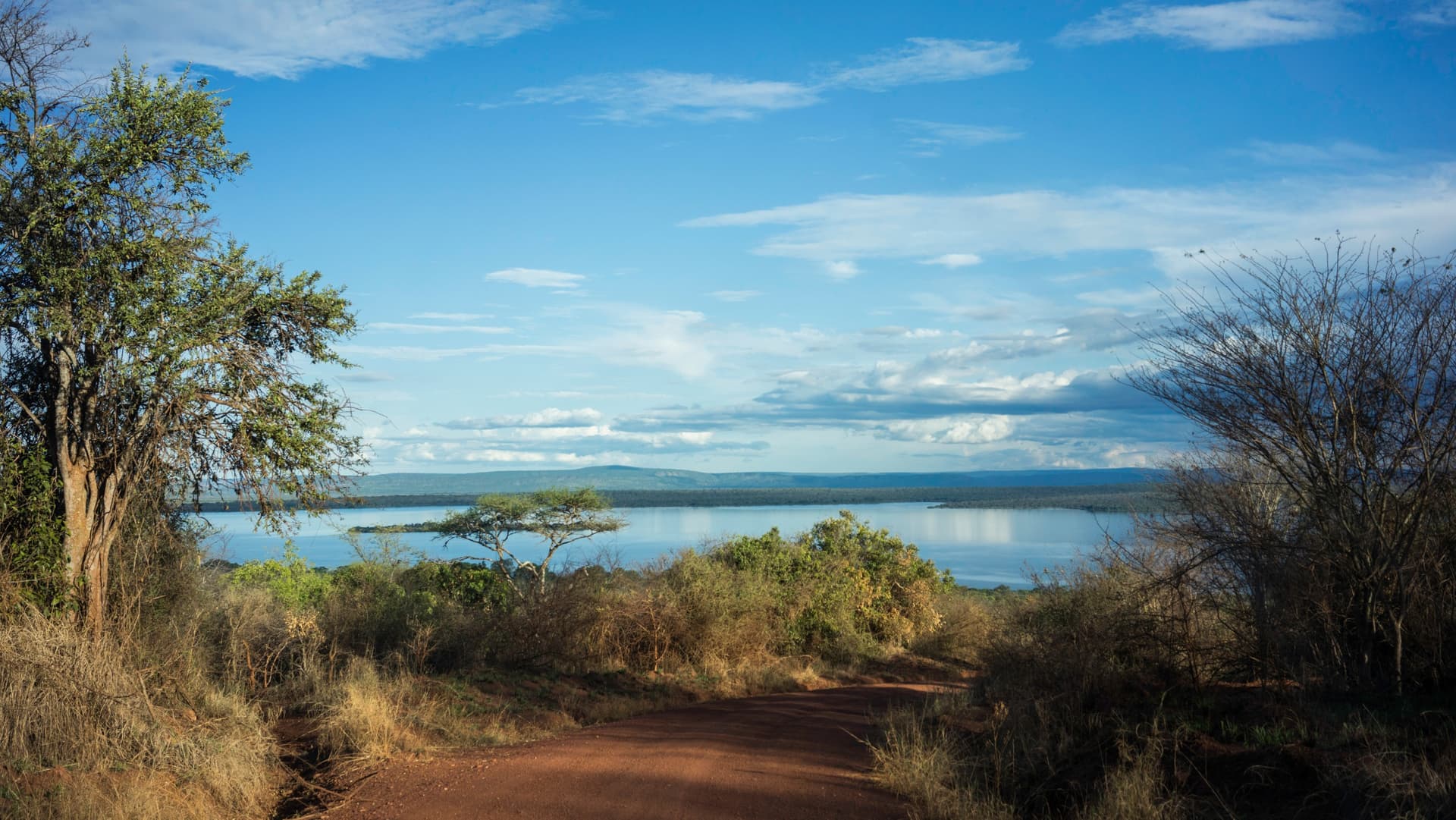
Akagera stretches across 1,122 km² in eastern Rwanda, along the Tanzanian border, in a region Rwandans simply call the Umutara. It is the country's only savanna national park, and its landscape bears no resemblance to the northern volcanoes or Nyungwe Forest. Here, grassy hills undulate to the south at 1,600 metres altitude, then the terrain flattens northward into a mosaic of papyrus marshes, lakes and acacia plains. The Akagera lake complex, formed by the river of the same name that marks the border, comprises around a dozen bodies of water including Lakes Ihema, Shakani, Birengero and Rwanyakizinga.
The park has a turbulent history that explains its current character. Established in 1934, it originally covered over 2,500 km², but after the 1994 genocide, the mass return of refugees led to the conversion of more than half the territory into pasture for Bahima herders. Boundaries were redrawn in 1997, and wildlife was decimated. Since 2010, African Parks has co-managed the site with the Rwanda Development Board, and ecological restoration has been methodical: reintroduction of seven lions from South Africa in 2015, then 18 black rhinos in 2017 and 30 southern white rhinos in 2021. Akagera is now the only Rwandan park where you can observe the Big Five.
The savanna is home to approximately 12,000 large mammals: elephants, buffalo, Maasai giraffes (introduced from Kenya), zebras, Cape elands, topis, impalas and several hundred hippopotamuses. On the bird front, over 480 recorded species are present, including the Shoebill stork that nests in the northern marshes, particularly around Lake Rwanyakizinga. Birdwatchers typically plan a full day in this northern zone, which is less accessible and therefore less frequented.
The climate differs markedly from the rest of Rwanda. At an average altitude of 1,300 metres, temperatures reach 25–30°C during the day, sometimes higher at the end of the dry season, compared to 18–22°C on the central highlands. Nights remain mild, around 16–18°C. This warmth, combined with open vegetation, radically transforms the travel experience: think short sleeves and sunscreen instead of the jumpers needed for the Volcanoes.
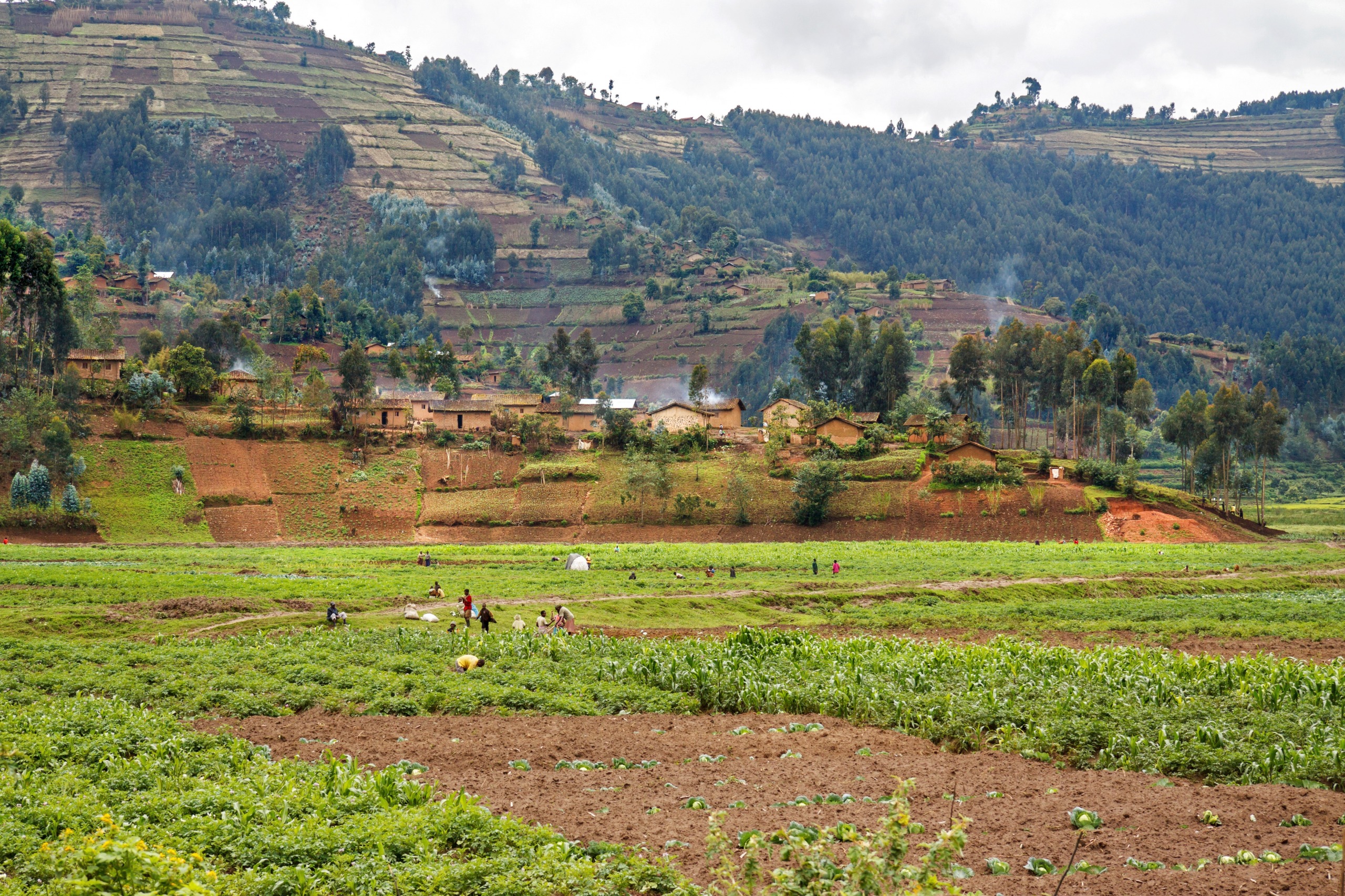
On the park's periphery, the villages of Kabarondo, Rwinkwavu and Kayonza live from herding long-horned Inyambo cattle, an ancestral breed once reserved for the royal court, and growing bananas, sorghum and coffee. The southern park gate, via Kayonza, is the most commonly used access from Kigali. The northern gate, via Nyagatare, serves those combining Akagera with entry or exit via Uganda.
For our English-speaking team based in Kigali, Akagera meets a specific need: extending a gorilla stay with a safari dimension, without requiring a long flight to the Serengeti or Maasai Mara. The park does not claim to rival the major wildlife concentrations of Tanzania, but it offers increasing sighting density each year, within a landscape that blends water, savanna and hills, just 2.5 hours from the capital.
Must-see experiences
Boat safari on Lake Ihema. Two hours navigating among hippo groups (the lake hosts over 800) and Nile crocodiles basking on the banks. Late afternoon departures offer the best light for cormorant and pelican colonies.
Early morning game drive in the south. A 4–5 hour outing from Kayonza, between the Mutumba hills and acacia plains. Good chances for lions, giraffes and Cape eland herds around watering holes.
Shoebill search in the north. The Shoebill stork, a 1.4-metre prehistoric-looking bird, nests in papyrus around Lake Rwanyakizinga. Spotting it requires a full day from the south, or an overnight stay at Magashi Camp in the northern zone.
Black rhino tracking. Guided activity led by African Parks rangers in radio-equipped vehicles. The 30 reintroduced individuals roam a protected central park zone; sightings are never guaranteed but carefully managed.
Inyambo herding at the edge. In villages like Nyamata or Rwinkwavu, visit an Inyambo kraal where lyre-horned cattle whose lineage traces back to the Rwandan monarchy are kept. Herders sing amazina y'inka, poems dedicated to each animal.
When to visit
Akagera can be visited year-round, but the two dry seasons offer the best viewing conditions. The long dry season, from June to September, sees vegetation thin out and animals gather around lakes and permanent water sources. Daytime temperatures climb to 28–30°C, with drier air and easily passable tracks. The short dry season, mid-December to February, offers a good compromise: wildlife still highly visible, greener landscapes, and temperatures around 26–28°C.
We advise against the lengthy rainy seasons, particularly mid-March to May when daily downpours (often 100–150 mm monthly) make northern tracks difficult to navigate and scatter wildlife into the bush. October and November see shorter rains, often in late afternoon, and remain acceptable for safari, provided you accept changeable light and occasionally misty mornings.
Practical advice
We recommend a minimum of 2 nights in the park—3 days on the ground—to combine a comprehensive game drive, a boat safari on Lake Ihema and an additional early morning outing. For travellers interested in the Shoebill or wishing to explore the northern zone (Lakes Rwanyakizinga and Hago), budget 3 nights, ideally split between a southern lodge (Ruzizi Tented Lodge or Karenge Bush Camp) and a northern camp (Magashi Camp). Access is by road from Kigali, 2.5 hours to the southern Kayonza gate on well-maintained asphalt.
Akagera combines logically with a gorilla stay in the Volcanoes National Park to the north-west, looping back through Kigali: this is our most requested 7–10 day itinerary. For longer stays, the sequence Volcanoes, Kivu, Nyungwe then Akagera covers all Rwandan ecosystems in 12–14 days. Comfort ranges from equipped camping to high-end lodges with pools, and the park suits families with children (from age 6–7 upwards for game drives), birdwatchers, and travellers wanting to add a savanna dimension to a primate stay without leaving the country.